
Introduction
Have you ever found yourself trapped in a cycle of negative thoughts that just won’t stop? You replay past mistakes, imagine the worst possible outcomes, or constantly doubt yourself. If this sounds familiar, you’re not alone. Many people search for how to stop negative overthinking because they feel mentally exhausted by thoughts they can’t seem to control.
Negative overthinking doesn’t just affect your mood—it can also reduce your confidence, increase stress, harm your relationships, and make even simple decisions feel overwhelming. The good news is that you don’t have to stay stuck in this cycle forever.
Learning how to stop negative overthinking isn’t about forcing yourself to think positively all the time. Instead, it’s about recognizing unhelpful thought patterns, challenging them, and replacing them with healthier ways of thinking.
In this guide, you’ll discover 10 practical ways to stop negative overthinking, calm your mind, and regain control of your life.
Table of Contents
- What Is Negative Overthinking?
- Why Does Negative Overthinking Happen?
- 10 Powerful Ways to Stop Negative Overthinking
- Frequently Asked Questions
- Final Thoughts
How to Stop Negative Overthinking
Negative overthinking is the habit of repeatedly focusing on fears, mistakes, problems, or worst-case scenarios without finding real solutions. Instead of helping you prepare for challenges, it keeps your mind trapped in a cycle of stress and anxiety.
People who struggle with how to stop negative overthinking often experience:
- Constant self-doubt.
- Fear of making mistakes.
- Difficulty making decisions.
- Imagining the worst possible outcome.
- Feeling mentally exhausted after thinking too much.
The first step toward change is understanding that thoughts are not facts. Just because your mind tells you something doesn’t mean it’s true. Learning to question your thoughts instead of automatically believing them is one of the most powerful ways to reduce negative overthinking.
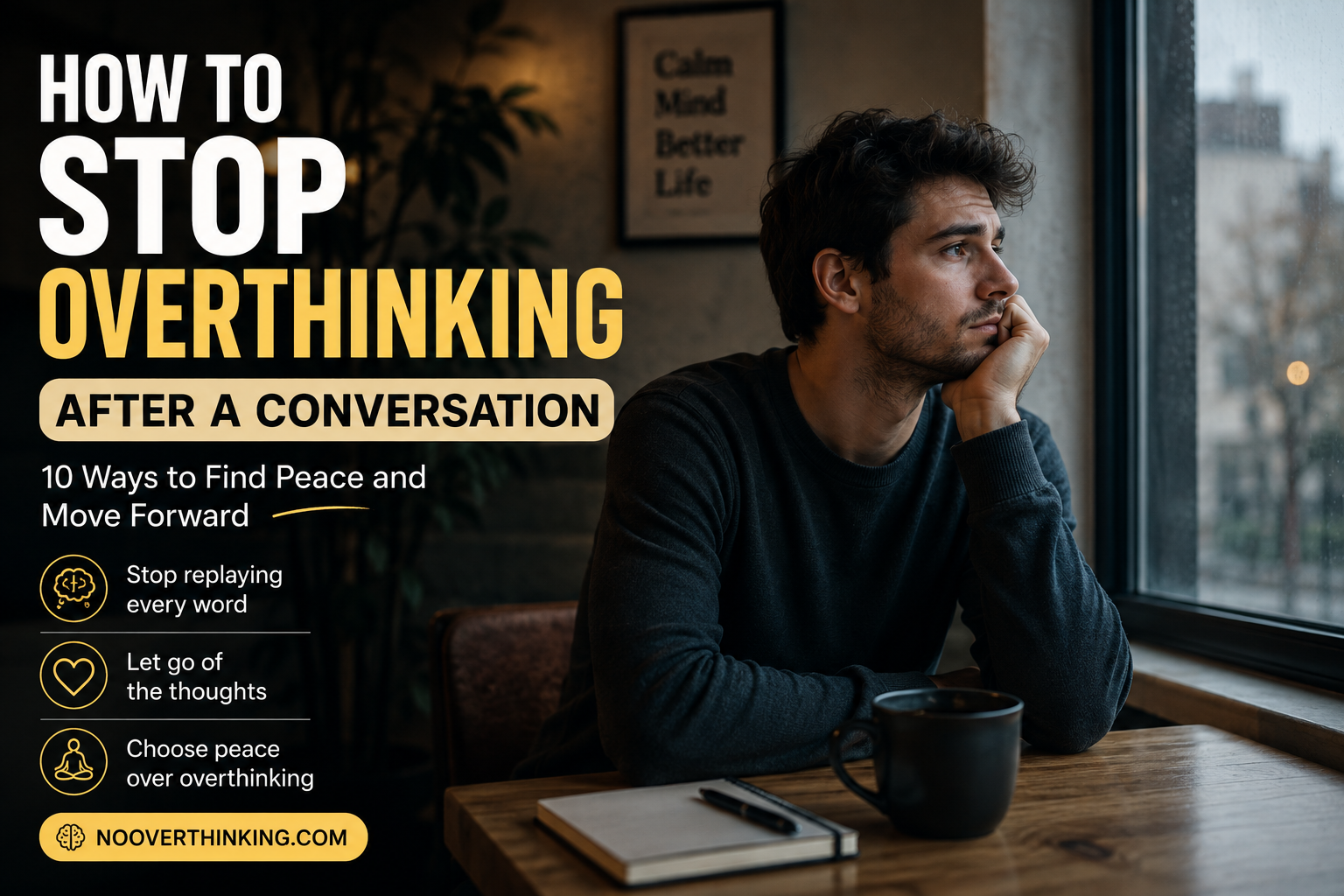
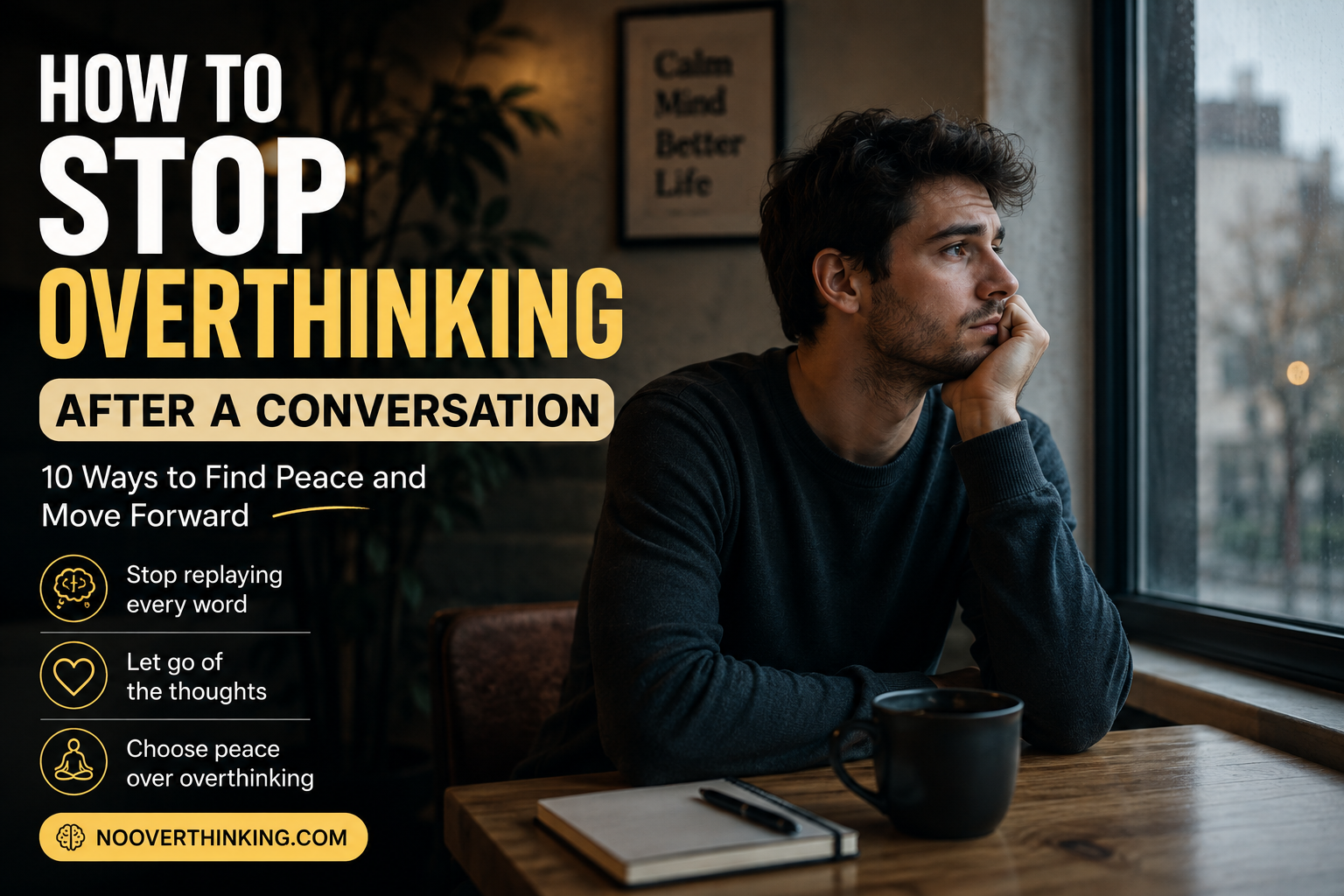
📷 Place the first image here
Alt Text:
How to stop negative overthinking
Why Does Negative Overthinking Happen?
Your brain is designed to protect you from danger. Thousands of years ago, constantly looking for threats helped humans survive. Today, however, that same survival instinct often causes unnecessary worry.
Your mind naturally pays more attention to negative experiences than positive ones. This is called the negativity bias. As a result, one mistake or one negative comment can stay in your mind much longer than several positive experiences.
When you don’t challenge these thoughts, they grow stronger over time. That’s why learning how to stop negative overthinking starts with recognizing that your brain is trying to protect you—not predict the future.
1. Recognize When Negative Overthinking Begins
The first step to breaking the cycle is awareness.
Many people don’t realize they’ve started overthinking until they’ve already spent an hour worrying.
Pay attention to the moment your thoughts begin to spiral.
Ask yourself:
- Am I solving a problem?
- Or am I repeating the same thoughts without making progress?
Simply recognizing the pattern can interrupt it before it becomes overwhelming.
2. Challenge Your Negative Thoughts
Not every thought deserves to be believed.
When a negative thought appears, ask yourself:
- Is this thought based on facts?
- What evidence supports it?
- What evidence contradicts it?
- Am I assuming the worst without proof?
Most negative thoughts lose their power when you examine them logically instead of emotionally.
Learning how to stop negative overthinking becomes much easier when you stop treating every thought as the truth.
3. Focus on What You Can Control
Negative overthinking often comes from trying to control things that are impossible to control.
Instead of worrying about everything that could happen, ask yourself:
- What can I control today?
- What action can I take right now?
- What is outside my control?
Focusing on your actions instead of your fears helps reduce anxiety and builds confidence over time.
4. Replace Worst-Case Scenarios with Realistic Thinking
Negative overthinking often convinces you that the worst possible outcome is the most likely one.
For example, you might think:
- “I’m going to fail.”
- “People will judge me.”
- “Everything will go wrong.”
Instead of accepting these thoughts as facts, ask yourself:
- What is the most realistic outcome?
- What evidence supports this fear?
- Have I been wrong about similar worries before?
Replacing catastrophic thinking with realistic thinking is one of the most effective ways to stop negative overthinking and reduce unnecessary anxiety.
5. Write Down Your Thoughts
Sometimes your brain keeps repeating the same worries because it hasn’t processed them clearly.
Writing your thoughts in a journal helps you organize them instead of carrying them around in your head.
Ask yourself:
- What am I worried about?
- Is this thought based on facts or assumptions?
- What can I do about it today?
Even spending five minutes writing can help you feel calmer and think more clearly.

6. Practice Mindfulness
Mindfulness helps you focus on the present instead of getting lost in negative thoughts about the past or the future.
You don’t need to meditate for an hour.
Start with five minutes.
Pay attention to your breathing, the sounds around you, or the feeling of your feet touching the ground.
The more you practice being present, the easier it becomes to stop negative overthinking before it takes control of your day.
If negative thoughts affect every area of your life, you may also enjoy our guide on How to Stop Overthinking Everything.
7. Limit Negative Triggers
Your environment has a powerful influence on your thoughts.
If you constantly watch negative news, spend too much time on social media, or surround yourself with pessimistic people, your mind is more likely to focus on fear and worry.
Instead, try to:
- Follow positive and educational content.
- Spend time with supportive people.
- Limit unnecessary social media scrolling.
- Read books that inspire personal growth.
Small changes in your daily environment can significantly reduce negative overthinking over time.
8. Practice Self-Compassion
Everyone makes mistakes.
Everyone has difficult days.
Instead of criticizing yourself every time something goes wrong, speak to yourself the same way you would speak to a close friend.
Ask yourself:
- Would I say these words to someone I love?
- Am I being too hard on myself?
Being kind to yourself doesn’t mean ignoring your mistakes. It means accepting that you’re human and giving yourself the opportunity to grow.
If you often find yourself replaying old memories, don’t miss our guide on How to Stop Overthinking the Past.
9. Take Action Instead of Waiting
Overthinking creates the illusion of progress.
Action creates real progress.
If you’re worried about something, ask yourself:
“What’s the smallest action I can take today?”
Maybe it’s making a phone call.
Maybe it’s sending an email.
Maybe it’s taking a short walk to clear your mind.
Every small action weakens the habit of overthinking and strengthens your confidence.
10. Remember That Thoughts Are Not Facts
One of the most important lessons in learning how to stop negative overthinking is understanding that not every thought deserves your attention.
Your thoughts are ideas—not evidence.
The next time a negative thought appears, pause and ask:
- Is this true?
- What proof do I have?
- Is there another explanation?
The more you question your thoughts, the less power they have over your emotions.