
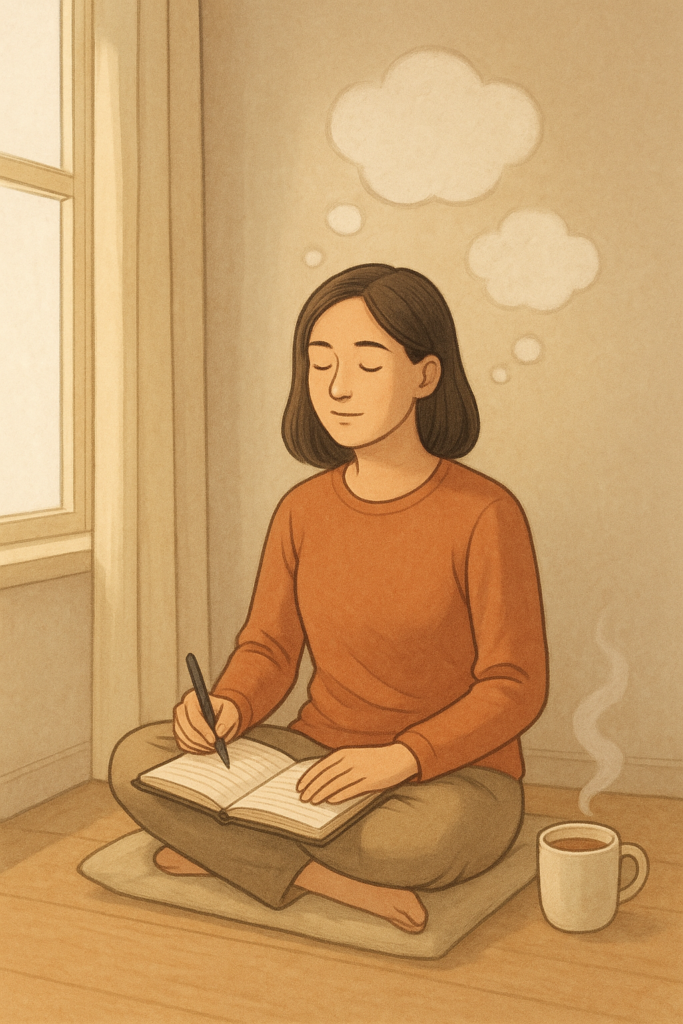
If your mind keeps replaying the same conversation, mistake, fear, or “what if” scenario, you are not alone. Rumination can feel like being trapped in a mental loop: you think harder, hoping to solve the problem, but the thoughts often become heavier instead of clearer. This guide on How to Stop Ruminating: 10 Ways to Break the Overthinking Cycle will help you understand why rumination happens and how to gently interrupt it with practical, evidence-informed strategies.
Rumination is not the same as productive reflection. Reflection helps you learn, decide, and move forward. Rumination keeps circling the same emotional material without creating a useful next step. You may notice it after conflict, during stress, before sleep, after a decision, or when you feel uncertain about yourself.
The goal is not to force your mind to be blank. That usually backfires. The goal is to change your relationship with repetitive thoughts so they have less power over your mood, attention, and behavior.
How to Stop Ruminating: 10 Ways to Break the Overthinking Cycle
Before we get into the tools, it helps to know that How to Stop Ruminating: 10 Ways to Break the Overthinking Cycle is not about “just thinking positive.” Rumination often shows up when your brain is trying to protect you from future pain, rejection, failure, or regret. The problem is that protection can turn into mental over-control.
These strategies are designed to help you pause the loop, calm your nervous system, and take small actions that support clarity. You do not have to use all 10 at once. Pick one or two that feel realistic and practice them consistently.
1. Name the Pattern Instead of Arguing With It
The first step is noticing rumination as a pattern, not treating every thought as an emergency. When you are inside a loop, the content feels urgent: “Why did I say that?” “What if they are upset?” “What if I ruined everything?” But the process is often the same: repetitive analysis without resolution.
Try saying to yourself:
- “This is rumination, not problem-solving.”
- “My mind is replaying this because I feel uncertain.”
- “I can notice this thought without following it all night.”
This small act of labeling creates distance. You are no longer fully fused with the thought; you are observing a mental habit. That does not make the feeling disappear immediately, but it can reduce the pressure to keep analyzing.
Example: Instead of “I embarrassed myself at the meeting,” try “I am having the thought that I embarrassed myself at the meeting.” That extra phrase can soften the grip of the thought and make room for a more balanced response.
2. Ask: Is This Reflection or Rumination?
A helpful question is: “Is this thought process leading to a next step?” Reflection usually ends with learning, planning, apologizing, asking for support, or accepting what happened. Rumination usually repeats the same emotional question without progress.
Use this quick checklist:
- Reflection: “What can I learn from this?”
- Rumination: “Why am I like this?”
- Reflection: “What is one action I can take?”
- Rumination: “What if this means everything will go wrong?”
- Reflection: “What do I know for sure?”
- Rumination: “What if there is something I missed?”
This distinction is central to How to Stop Ruminating: 10 Ways to Break the Overthinking Cycle because it teaches your mind that not every repeated thought deserves more time. Sometimes the kindest response is to stop feeding the loop and redirect your energy.
3. Set a Worry Window
Trying to ban ruminative thoughts all day can make them louder. A “worry window” gives your brain a designated time to think things through, which can reduce the urge to ruminate constantly.
Choose a 10- to 20-minute time slot earlier in the day, not right before bed. During that window, write down what is bothering you. If rumination pops up outside that time, tell yourself, “I will return to this during my worry window.”
During the window, divide your page into three sections:
- What I am replaying: Write the thought honestly.
- What I can control: List any practical actions.
- What I may need to release: Name what is uncertain or outside your control.
Example: If you are replaying a text message you sent, a controllable action might be “send a clarifying message if needed.” What you may need to release is “how quickly the other person replies” or “whether they interpret my tone perfectly.”
4. Move From “Why” Questions to “What Now?” Questions
Rumination often thrives on unanswerable “why” questions: “Why did this happen?” “Why did they act that way?” “Why can’t I stop thinking about it?” Some “why” questions are useful, but many become traps when you are emotionally activated.
To interrupt the loop, shift toward action-oriented questions:
- “What is one small thing I can do next?”
- “What would help me feel 5% calmer right now?”
- “What information do I actually have?”
- “What would I tell a friend in this situation?”
This is one reason How to Stop Ruminating: 10 Ways to Break the Overthinking Cycle focuses on behavior, not just thought control. When your mind is stuck, a small action can create momentum that thinking alone cannot.
5. Ground Yourself in the Present Moment
Rumination pulls you into the past or future. Grounding brings your attention back to the present, where your body can begin to settle. You do not have to do this perfectly. Even 30 seconds of grounding can interrupt the intensity of repetitive thoughts.
Try the 5-4-3-2-1 technique:
- Name 5 things you can see.
- Name 4 things you can feel.
- Name 3 things you can hear.
- Name 2 things you can smell.
- Name 1 thing you can taste or one slow breath you can take.
Another option is to place your feet flat on the floor and press your toes down gently. Notice the contact between your body and the ground. This sends a subtle signal of stability to the nervous system.
If you want a deeper introduction to present-moment awareness, you may find this beginner’s guide to mindfulness meditation helpful.
6. Write the Thought, Then Write a More Balanced Response
Rumination often sounds convincing because it focuses on threat, regret, or uncertainty. Writing helps you slow the thought down and evaluate it more fairly. This is not about pretending everything is fine. It is about widening your perspective.
Use a simple two-column exercise:
- Ruminative thought: “I made one mistake, so my boss probably thinks I am incompetent.”
- Balanced response: “I made a mistake, and I can correct it. One mistake does not define my overall performance.”
Another example:
- Ruminative thought: “They took hours to reply, so they must be mad at me.”
- Balanced response: “There are many reasons someone may reply late. I do not have enough evidence to assume the worst.”
When people search for How to Stop Ruminating: 10 Ways to Break the Overthinking Cycle, they often want relief fast. Writing may seem simple, but it is powerful because it moves thoughts out of your head and onto a page where they are easier to examine.
7. Use a Body-Based Reset
Rumination is not only mental. It can come with a tight chest, tense shoulders, clenched jaw, shallow breathing, stomach discomfort, or restlessness. Calming the body can make it easier to calm the mind.
Try one of these body-based resets:
- Physiological sigh: Take a deep inhale, add a small second inhale at the top, then exhale slowly.
- Progressive muscle relaxation: Tense one muscle group for a few seconds, then release.
- Slow walking: Walk at an easy pace and notice each step.
- Stretching: Release the neck, shoulders, hips, and hands.
- Cold water: Splash cool water on your face or hold a cold drink mindfully.
Stress can intensify repetitive thinking, and the American Psychological Association offers helpful information about stress and its effects. If your rumination is connected to ongoing stress, supporting your body is not optional; it is part of the process.
8. Limit Reassurance-Seeking and Checking
When you are ruminating, you may feel tempted to reread messages, check social media, search symptoms, ask others if everything is okay, or mentally review events repeatedly. These behaviors can bring short-term relief, but they often teach the brain that uncertainty is dangerous and must be eliminated.
Instead of checking immediately, create a pause:
- Notice the urge to check or ask for reassurance.
- Wait 10 minutes before acting on it.
- Do a grounding technique during the wait.
- Ask, “Will checking help me solve something, or will it restart the loop?”
Example: If you want to reread an email for the tenth time, decide to review it once more only if there is a specific action to take. If there is no action, close the tab and redirect to a task that matters.
9. Give Your Mind a Concrete Task
Sometimes the brain needs a bridge out of rumination. A concrete task engages attention and interrupts repetitive thinking. The task should be simple enough to start, but absorbing enough to redirect mental energy.
Try:
- Doing dishes while focusing on the temperature of the water.
- Taking a 10-minute walk without your phone.
- Organizing one drawer.
- Cooking a simple meal.
- Completing a short workout or stretching routine.
- Writing a realistic to-do list for tomorrow.
The key is not to use busyness to avoid every feeling. The key is to stop giving rumination unlimited access to your attention. If you are already prone to overthinking many areas of life, this related guide on how to stop overthinking everything may also be useful.
10. Practice Self-Compassion Instead of Self-Criticism
Rumination often comes with a harsh inner voice. You may criticize yourself for the original issue and then criticize yourself again for not being able to stop thinking about it. That double layer of judgment keeps the cycle going.
Self-compassion is not making excuses. It is responding to yourself with honesty and care. Try placing a hand on your chest and saying:
- “This is hard, and I am doing my best to respond wisely.”
- “I can learn from this without attacking myself.”
- “A painful thought is not proof that I failed.”
Self-compassion reduces defensiveness and creates the emotional safety needed for change. It is a practical skill, not a personality trait you either have or do not have.
Why Rumination Feels So Hard to Stop
Rumination can feel useful because it gives the illusion of control. If you keep thinking, maybe you will prevent a bad outcome, understand every detail, or avoid future mistakes. But after a certain point, the mind is no longer learning; it is rehearsing distress.
This is why How to Stop Ruminating: 10 Ways to Break the Overthinking Cycle requires more than telling yourself to stop. The brain tends to return to what feels unresolved. If an issue involves shame, uncertainty, rejection, fear, grief, or pressure, it may pull your attention repeatedly.
Common triggers include:
- Conflict with a partner, friend, coworker, or family member.
- Feeling judged, rejected, or misunderstood.
- Making a mistake at work or school.
- Waiting for an important answer.
- Comparing yourself to others.
- Trying to make the “perfect” decision.
- Feeling tired, stressed, lonely, or overstimulated.
Rumination can also overlap with anxiety, low mood, trauma responses, obsessive thinking, or chronic stress. This article is educational and not a diagnosis. If repetitive thoughts feel unmanageable, interfere with daily life, or come with intense distress, consider reaching out to a licensed mental health professional. You can also learn more about anxiety-related concerns from the National Institute of Mental Health.
How to Stop Ruminating: 10 Ways to Break the Overthinking Cycle at Night
Nighttime rumination can feel especially intense because there are fewer distractions, the body is tired, and problems may seem larger in the dark. If you are searching for How to Stop Ruminating: 10 Ways to Break the Overthinking Cycle because your thoughts spike at bedtime, focus on reducing stimulation and creating a repeatable wind-down routine.
Try this simple nighttime plan:
- Brain dump for five minutes: Write every worry without trying to solve it.
- Choose one next step: If something needs action, write when you will handle it.
- Close the loop: Say, “This is written down. I do not need to solve it tonight.”
- Relax the body: Use slow breathing, gentle stretching, or progressive relaxation.
- Redirect attention: Listen to a calm audiobook, sleep meditation, or quiet music.
If overthinking regularly disrupts your sleep, you may also like this guide on overthinking at night or these tips for racing thoughts in bed.
Practical Examples of Breaking the Rumination Loop
After an Awkward Conversation
You keep replaying a joke that did not land. Your mind says, “They probably think I am weird.” Instead of replaying the moment for hours, label it: “This is rumination.” Then ask, “Is there a real repair needed?” If not, practice a balanced response: “One awkward moment does not define the relationship.” Redirect to a concrete task, like making tea or preparing for tomorrow.
After Making a Mistake
You sent a report with an error. Rumination says, “I always mess up.” Reflection says, “I can correct the error and create a checklist for next time.” Send a correction if needed, write down the lesson, and stop reviewing the mistake after you have taken the appropriate action.
While Waiting for a Reply
You texted someone and they have not responded. Your mind creates stories: “They are upset,” “I said too much,” “This is bad.” Pause before checking. Remind yourself, “A delayed reply is not enough evidence.” Put your phone away for 20 minutes and do something grounding.
When Rumination May Be a Sign to Get Support
Many people ruminate sometimes, especially during stressful periods. However, it may be time to seek support if repetitive thoughts feel overwhelming, last for long periods, disrupt sleep, affect relationships, reduce your ability to work or study, or come with urges to harm yourself. If you feel at risk of harming yourself or someone else, seek immediate help through local emergency services or a crisis hotline in your area.
A therapist can help you explore patterns, learn cognitive and behavioral tools, process painful experiences, and develop healthier ways to relate to uncertainty. Approaches such as cognitive behavioral therapy, mindfulness-based strategies, acceptance and commitment therapy, and compassion-focused work may be helpful for some people.
Learning How to Stop Ruminating: 10 Ways to Break the Overthinking Cycle can be a strong starting point, but you do not have to manage persistent distress alone.
Common Mistakes That Keep Rumination Going
Sometimes the effort to stop rumination accidentally strengthens it. Watch for these common traps:
- Trying to force thoughts away: Suppression often makes thoughts return stronger.
- Waiting to feel certain: Some situations do not offer perfect certainty.
- Confusing analysis with action: Thinking about a problem is not the same as taking a helpful step.
- Using self-criticism as motivation: Shame usually fuels more rumination.
- Checking repeatedly: Reassurance can become a cycle rather than a solution.
A more effective approach is to notice the loop, calm your body, identify any useful action, and practice letting the rest be unfinished for now.
A Simple 3-Minute Reset for Rumination
When you need quick support, use this short reset based on the ideas in How to Stop Ruminating: 10 Ways to Break the Overthinking Cycle:
- Minute 1: Name it. Say, “I am ruminating. My mind is trying to solve uncertainty.”
- Minute 2: Ground it. Feel your feet, relax your jaw, and take three slow breaths.
- Minute 3: Choose it. Ask, “What is one helpful action or redirection I can take right now?”
Your action might be sending one necessary message, writing a note for later, stepping outside, drinking water, stretching, or returning to the task in front of you. Small shifts matter because they train your attention to move, even when the mind wants to stay stuck.
Conclusion
Rumination is exhausting, but it is also workable. You can learn to notice repetitive thoughts, separate reflection from rumination, calm your body, reduce checking, write more balanced responses, and take small values-based actions. The process takes practice, and progress may come gradually, but every interruption of the loop teaches your brain a new path.
How to Stop Ruminating: 10 Ways to Break the Overthinking Cycle is ultimately about building a kinder, steadier relationship with your mind. You do not need perfect control over your thoughts to feel more peaceful. You need practical tools, patience, and the willingness to return to the present one small step at a time.
FAQ
What is the fastest way to stop rumination in the moment?
The fastest first step is to label it: “This is rumination.” Then ground your body with slow breathing, feeling your feet on the floor, or naming what you can see and hear. If there is a useful action, take one small step. If not, redirect your attention to a concrete task.
Is rumination the same as overthinking?
They are closely related, but not always identical. Overthinking is a broad term for excessive analysis, worry, or mental replay. Rumination usually refers to repetitive thinking about distressing events, emotions, regrets, or unresolved concerns, especially when the thinking does not lead to helpful action.
Can journaling make rumination worse?
It can if journaling becomes endless replay without structure. To make journaling helpful, set a time limit and include a problem-solving section. Write what you are thinking, what you can control, and what you may need to let go of for now.
How to Stop Ruminating: 10 Ways to Break the Overthinking Cycle when thoughts come back?
Expect thoughts to return sometimes. The goal is not to eliminate every thought, but to respond differently when it appears. Label the pattern, avoid arguing with the thought, use a grounding skill, and choose a small action that moves you toward the present.
Pingback: How to Deal With Negative Thoughts and Calm Your Mind: 7 Tips
Pingback: How to Deal With Intrusive Thoughts: Practical Ways to Find Peace in 9 Steps
Pingback: Racing Thoughts: Why Your Mind Won’t Slow Down and How to Calm It: 7 Ways
Pingback: How to Stop Overthinking at Night and Sleep Better: 7 Tips
Pingback: Analysis Paralysis: 7 Steps to Make Clear Decisions
Pingback: Reassurance Seeking: 8 Steps to Break the Anxiety Cycle
Pingback: How to Stop Overthinking a Text: 7 Steps That Help
Pingback: How to Stop Thinking About Work After Work: 7 Simple Steps
Pingback: How to Stop Doomscrolling Before Bed: 7 Practical Steps