
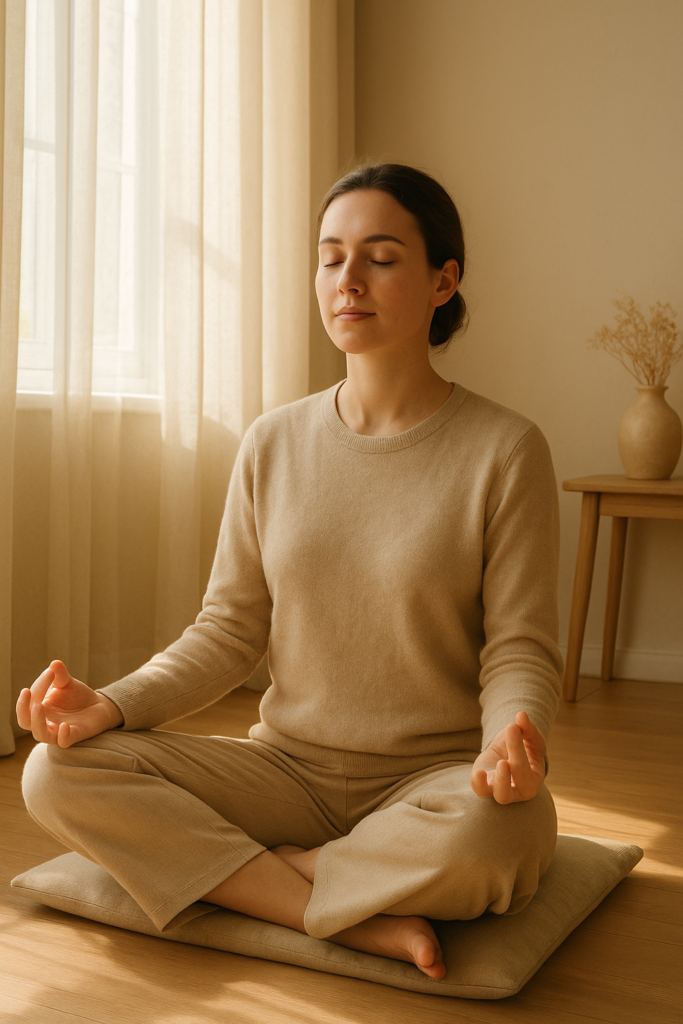
Mindfulness meditation is a practice of noticing what is happening in the present, such as sounds, breathing, or the feeling of your feet on the floor. This guide explains the idea, offers a short practice, and helps you decide when to adapt it or seek support.
For many people, mindfulness becomes a practical tool for handling stress, overthinking, emotional reactivity, and mental clutter. It will not solve every problem instantly, and it is not a replacement for professional mental health care when support is needed. But when practiced consistently, it can help you relate to your thoughts and feelings in a healthier, more grounded way.
What Mindfulness Meditation Means
Mindfulness meditation is the practice of paying attention to the present moment on purpose, without harsh judgment. Instead of getting lost in worries about the future or replaying the past, you gently bring your attention back to what is happening right now. That might be your breath, your body, sounds around you, or the feeling of your feet on the floor.
Just as physical exercise strengthens the body, mindfulness practice strengthens your ability to notice where your attention is going and bring it back with compassion.
This does not mean your thoughts disappear. In fact, beginners often realize just how active the mind is. That is normal. The practice is not to stop thinking. The practice is to notice thinking, then return to the present moment again and again.
Mindfulness versus meditation
Meditation includes several kinds of practice. Mindfulness meditation is one approach: deliberately noticing present experience without immediately judging or reacting to it.
Think of meditation as the workout and mindfulness as the skill you carry into daily life.
What Mindfulness Meditation Is Not
Many beginners quit because they think they are doing it wrong. Usually, they are simply expecting the wrong thing.
- It is not about having no thoughts. Thoughts are part of being human. Mindfulness teaches you to observe them rather than automatically believe or fight them.
- It is not a quick fix. Some sessions may feel calming, while others may feel restless. Both can still be useful.
- It is not about suppressing emotions. Mindfulness allows emotions to be noticed with more space and less immediate reaction.
- It is not only for calm people. If your mind feels busy, you may benefit from mindfulness just as much as anyone else.
- It is not a substitute for medical or mental health treatment. If you are experiencing severe anxiety, depression, trauma symptoms, thoughts of self-harm, or symptoms that interfere with daily life, consider reaching out to a qualified mental health professional.
Why People Try Mindfulness
Modern life constantly pulls attention in different directions. Notifications, deadlines, responsibilities, news, and social comparison can keep the nervous system on alert. Over time, many people feel mentally scattered or emotionally drained.
Mindfulness offers a way to pause the automatic cycle of reacting, rushing, and overthinking. It gives you a few seconds of space between what happens and how you respond.
Research on mindfulness continues to grow, and many studies suggest it may support stress reduction, emotional regulation, attention, and overall well-being for some people. The National Center for Complementary and Integrative Health provides a helpful overview of meditation and mindfulness, including what current research says and what people should keep in mind.
Mindfulness can also be useful for people who tend to overthink. Instead of arguing with every thought, you learn to recognize, "This is a thought," and return to the present. If overthinking is a frequent struggle for you, you may also find NoOverthinking’s guide on how to stop overthinking and calm your mind helpful.
How Mindfulness Meditation Works
Mindfulness meditation works by training attention and awareness. Most people spend a large part of the day on autopilot. You might drive somewhere and barely remember the trip, eat while scrolling, or mentally rehearse a conversation while someone is talking to you. Mindfulness interrupts autopilot.
During meditation, you choose an anchor for your attention. The breath is the most common anchor because it is always available. When your mind wanders, you notice it and return to the breath. That returning is the practice.
The basic cycle of mindfulness meditation
- You choose something to focus on, such as your breathing.
- Your mind wanders into thoughts, memories, planning, or worries.
- You notice that your mind wandered.
- You gently bring attention back to the breath or another anchor.
- You repeat this process without criticizing yourself.
That is the whole practice. It may sound too simple, but simple does not mean easy. The skill grows through repetition.
A Six-Step Practice for Beginners
If you are new to practice, do not start with long sessions. A short, realistic routine is better than an ambitious plan you abandon.
Step 1: Choose a quiet enough place
You do not need perfect silence. Choose a place where you can sit comfortably for a few minutes. It could be a chair, couch, cushion, or even the edge of your bed. If there is background noise, let it be part of the practice rather than a problem to solve.
Step 2: Set a short timer
Start with two to five minutes. This helps your mind relax because you do not have to keep checking the clock. As you build consistency, you can gradually increase to 10, 15, or 20 minutes if that feels useful.
Step 3: Sit in a comfortable, alert posture
You do not need a special pose. Sit in a way that supports both comfort and wakefulness. Let your shoulders soften. Rest your hands naturally. Keep your back upright but not rigid.
Step 4: Bring attention to your breath
Notice the natural flow of breathing. You do not have to change it. Feel the breath at your nose, chest, belly, or wherever it is easiest to notice. You might silently label it as "in" and "out" if that helps.
Step 5: Notice when your mind wanders
Your mind will wander. This is not failure. When you notice thoughts about work, relationships, errands, or the past, acknowledge them gently. You might say to yourself, "thinking," then return to the breath.
Step 6: End with kindness
When the timer ends, take one deeper breath and notice how you feel. You do not have to feel calm for the session to count. The goal is awareness, not a perfect mood.
Practical Examples of Mindfulness Meditation
Here are a few everyday examples that make it more practical.
Example 1: Mindful breathing before a meeting
You have a stressful meeting in five minutes. Instead of rushing straight into it, you sit quietly and feel three slow breaths. You notice tension in your shoulders and soften them. You still may feel nervous, but you enter the meeting with more awareness.
Example 2: Mindfulness during an argument
Someone says something that upsets you. Your first impulse is to react defensively. Mindfulness helps you notice the heat in your chest, the urge to interrupt, and the thoughts forming in your mind. That awareness gives you a moment to choose a calmer response.
Example 3: Mindful walking
During a short walk, you pay attention to your feet touching the ground, the movement of your legs, the air on your skin, and the sounds around you. When your mind starts planning dinner or replaying an email, you gently return to the feeling of walking.
Example 4: Mindfulness at night
You lie down and your mind starts reviewing everything you did that day. Instead of following every thought, you bring attention to the weight of your body on the mattress and the rhythm of your breath. If nighttime thinking is a common challenge, this guide on how to stop racing thoughts at night offers additional calming strategies.
Benefits of Mindfulness Meditation
Mindfulness meditation can support mental and emotional well-being in several ways. The benefits vary from person to person, and they often develop gradually with practice.
- More awareness of thought patterns: You may start noticing repetitive worries, self-criticism, or mental habits sooner.
- Better emotional regulation: Mindfulness can help you pause before reacting automatically.
- Improved focus: Returning to the breath trains attention, which may support concentration over time.
- Stress management: Mindfulness may help some people respond to stress with more steadiness. The American Psychological Association offers more information about stress and its effects.
- Greater self-compassion: Practicing nonjudgment can soften the way you relate to yourself.
It is important to keep expectations realistic. Some people feel relaxed after meditation. Others feel restless at first because they are finally noticing how busy the mind is. Both experiences are common.
Common Beginner Challenges
A wandering mind is common during practice. If the exercise feels unpleasant, adapt it, shorten it, or stop. Difficulty with an exercise does not mean you have failed.
"I cannot stop thinking"
You are not supposed to stop thinking. The mind produces thoughts the way the heart beats. Instead of trying to shut thoughts down, practice noticing them. Each time you return to the breath, you strengthen mindfulness.
"I get bored"
Boredom is something to observe. Where do you feel it in the body? What thoughts come with it? Does it stay the same or change? Mindfulness turns boredom into an object of curiosity.
"I feel more anxious when I sit still"
Pause if meditation brings up intense distress. You can try an external focus, such as sounds in the room, or discuss suitable options with a qualified professional before continuing.
"I keep forgetting to practice"
Attach meditation to something you already do. For example, practice for three minutes after brushing your teeth, before your morning coffee, or right after shutting your laptop at the end of the workday.
Noticing an Overthinking Loop
Overthinking often feels like being trapped in a mental loop. You analyze, replay, predict, and second-guess, hoping to find certainty. Mindfulness does not force the loop to stop. Instead, it helps you step back and see the loop more clearly.
A thought like "I am going to fail" can be noticed as a fear-based thought rather than accepted as truth.
Try this simple exercise when overthinking appears:
- Pause and take one slow breath.
- Silently name what is happening: "overthinking," "worrying," or "planning."
- Notice one physical sensation, such as your hands, feet, or breathing.
- Ask, "What is one helpful action I can take right now?"
- If there is no useful action, practice returning to the present moment.
If anxious thoughts feel persistent or interfere with daily life, support is available. You can learn more about common signs in NoOverthinking’s article on what anxiety feels like, and consider speaking with a mental health professional if symptoms feel difficult to manage.
Simple Mindfulness Exercises for Beginners
You do not have to limit mindfulness to sitting meditation. These exercises are simple ways to bring awareness into everyday life.
The three-breath reset
Pause wherever you are. Take three natural breaths. For the first breath, notice the inhale. For the second breath, notice the exhale. For the third breath, relax your jaw and shoulders. This can be useful before sending an important message, entering a conversation, or transitioning between tasks.
The five senses practice
Name five things you can see, four things you can feel, three things you can hear, two things you can smell, and one thing you can taste. This grounding technique can help bring attention back to the present moment when your mind feels scattered.
Mindful eating
Choose one bite of food and slow down. Notice the color, texture, smell, temperature, and taste. Chew slowly. This practice can help you experience a familiar activity with fresh attention.
Body scan meditation
Bring awareness slowly through the body, starting at the feet and moving upward. Notice sensations without trying to change them. If you find tension, breathe gently and allow the area to soften if it wants to.
How to Build a Mindfulness Routine That Lasts
Choose a routine you can repeat without turning practice into another performance target.
Start small and make the habit easy to repeat. Here are practical tips:
- Practice at the same time each day. Morning, lunch break, or bedtime can all work.
- Keep sessions short at first. Two minutes daily is more useful than 20 minutes once a month.
- Use reminders. Put a note on your desk or set a gentle phone reminder.
- Track your practice lightly. A simple checkmark on a calendar can build momentum.
- Let go of perfection. Missing a day does not mean you failed. Simply begin again.
You can also pair mindfulness with journaling, stretching, or a calming bedtime routine. If your main challenge is overthinking in the evening, this article on overthinking at night may give you more ideas for winding down.
When Mindfulness May Not Be Enough
Mindfulness meditation can be supportive, but it is not the only tool for mental health. If you are dealing with intense anxiety, panic symptoms, depression, trauma, substance use concerns, or thoughts of harming yourself, please consider reaching out to a licensed mental health professional or a trusted medical provider. You deserve support that fits your situation.
It is also okay if mindfulness does not feel right for you at this moment. Some people prefer movement-based grounding, therapy, breathing exercises, creative activities, social support, or other coping tools. Personal growth is not one-size-fits-all.
FAQ
Can I practice with a busy mind?
It is a practice of noticing your busy mind without fighting it. You choose an anchor, such as your breath, and gently return to it whenever thoughts pull you away. A busy mind does not mean you are bad at meditation; it gives you more opportunities to practice awareness.
How long should beginners meditate?
Beginners can start with two to five minutes a day. Once that feels manageable, you can slowly increase the time. Consistency is usually more helpful than long sessions that feel overwhelming.
Can mindfulness meditation help with stress?
Mindfulness meditation may help some people manage stress by increasing awareness and creating a pause before reacting. It is not a guaranteed cure, but it can be a useful part of a broader stress-management plan that may include sleep, movement, social support, and professional help when needed.
Do I have to sit cross-legged to meditate?
No. You can sit in a chair, lie down if you can stay awake, stand, or practice while walking. The best posture is one that feels stable, comfortable, and alert.
What should I do if meditation makes me uncomfortable?
You can shorten a session, keep your eyes open, or focus on sounds. Stop if the exercise increases distress; seek guidance before continuing if it brings up intense symptoms or trauma memories.
Conclusion
You do not need a silent room, a perfect mindset, or years of experience. You only need a willingness to pause, notice, and begin again.
Start with a few minutes. Notice your breath. Let thoughts come and go. Return gently. Over time, this simple practice can help you build a calmer, more compassionate relationship with your mind.
To bring practice into your working day, try these small mindfulness exercises at work, including pauses before email and between meetings.
Evidence and Limits
NCCIH’s review of meditation and mindfulness describes possible benefits but also limitations in the research. Some people experience increased distress. Mindfulness should not replace care or delay assessment of a health problem.
Pingback: How to Stop Ruminating: 10 Ways to Break the Overthinking Cycle
Pingback: How to Deal With Negative Thoughts and Calm Your Mind: 7 Tips
Pingback: How to Deal With Intrusive Thoughts: Practical Ways to Find Peace in 9 Steps
Pingback: How to Stop Worrying: 12 Simple Ways to Take Control of Your Thoughts