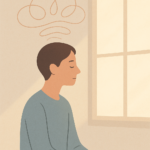

If your mind feels like it has twenty browser tabs open at once, you are not alone. Many people search for How to Stop Racing Thoughts: 7 Practical Ways to Calm Your Mind because they want relief from the fast, repetitive, hard-to-settle stream of worries, plans, memories, and what-if thoughts. Racing thoughts can show up during stress, at bedtime, before a big decision, after an awkward conversation, or anytime your nervous system feels overloaded.
The good news is that you do not have to force your mind to go blank. In fact, trying to aggressively stop thoughts often makes them louder. A calmer approach is to change your relationship with your thoughts, settle your body, and give your brain clear signals that you are safe enough to slow down. That is why this guide, How to Stop Racing Thoughts: 7 Practical Ways to Calm Your Mind, focuses on realistic tools you can use in everyday life.
What Are Racing Thoughts?
Racing thoughts are fast-moving thoughts that feel difficult to control or interrupt. They may jump from one topic to another, repeat the same concern, or create a chain of worst-case scenarios. For example, one small mistake at work can quickly turn into, What if my boss is disappointed? What if I lose respect? What if this ruins everything?
Racing thoughts are not a personal failure. They are often connected to stress, overthinking, poor sleep, overstimulation, unresolved emotions, or anxiety. According to the American Psychological Association, stress can affect both the body and mind, influencing attention, mood, and physical tension. You can learn more from the APA’s overview of stress and its effects.
Sometimes racing thoughts are temporary and tied to a specific situation. Other times, they may be part of a larger pattern of excessive worry, panic symptoms, or ongoing emotional distress. If racing thoughts feel constant, interfere with sleep or daily functioning, or come with thoughts of harming yourself, it is important to reach out to a licensed mental health professional or a crisis support service in your area.
Why Your Mind Speeds Up
Your brain is designed to protect you. When it senses uncertainty, pressure, or emotional threat, it tries to predict and solve problems quickly. That can be useful when there is an actual urgent situation. But when the threat is social, emotional, imagined, or unresolved, the mind may keep running in circles without finding closure.
Common triggers for racing thoughts include:
- Stressful deadlines or too many responsibilities.
- Unfinished conversations that leave you replaying what happened.
- Fear of making the wrong decision or disappointing others.
- Too much screen time, especially before bed.
- Lack of sleep, caffeine, or irregular routines.
- Emotional avoidance, such as pushing feelings down until they return louder.
Understanding the trigger matters because racing thoughts are often a signal, not the enemy. Instead of asking, How do I make my brain stop?, try asking, What is my mind trying to protect me from, and what would help me feel safer right now?
How to Stop Racing Thoughts: 7 Practical Ways to Calm Your Mind
Before the seven tools, remember that How to Stop Racing Thoughts: 7 Practical Ways to Calm Your Mind is not about controlling every thought. It is about building small habits that reduce mental intensity and help you return to the present moment. You may not feel perfectly calm immediately, but you can learn to feel steadier.
1. Name the Thought Spiral
When thoughts race, it is easy to believe every thought needs your attention. Naming what is happening creates a little distance. Instead of following every worry, label the process: This is a thought spiral, This is my anxious planning mode, or This is my mind trying to solve uncertainty.
This simple act is powerful because it shifts you from being inside the storm to observing the storm. You are not saying the thoughts are meaningless. You are saying they are thoughts, not commands.
Try this three-step practice:
- Pause and take one slow breath.
- Say silently, I am noticing racing thoughts.
- Add, I do not have to solve everything right now.
For example, if you are lying awake thinking about tomorrow’s meeting, you might say, My mind is rehearsing because it wants me to be prepared. I can write down one action and let the rest wait until morning. This is the first practical foundation of How to Stop Racing Thoughts: 7 Practical Ways to Calm Your Mind.
2. Calm Your Body Before You Debate Your Thoughts
Many people try to reason with racing thoughts while their body is still in a stress response. But when your heart is pounding, muscles are tense, and breathing is shallow, your brain may not respond well to logic. Start with the body first.
A simple breathing technique can help signal safety to your nervous system. Try breathing in for four counts, exhaling for six counts, and repeating for two to five minutes. The longer exhale is not magic, but it may support relaxation by slowing the rhythm of your breathing.
You can also try:
- Dropping your shoulders and unclenching your jaw.
- Placing both feet on the floor and pressing your toes down gently.
- Putting a hand on your chest or stomach to feel your breath.
- Taking a slow walk without checking your phone.
- Stretching your neck, back, or hands for one minute.
Practical example: before responding to a stressful text, take five long exhales and relax your hands. Then reread the message. You may notice that your response becomes more measured. Body-based calming is a key part of How to Stop Racing Thoughts: 7 Practical Ways to Calm Your Mind because a settled body makes a settled mind more possible.
3. Use the 5-4-3-2-1 Grounding Method
Racing thoughts often pull you into the future or the past. Grounding brings attention back to the present. One of the easiest techniques is the 5-4-3-2-1 method.
Look around and identify:
- 5 things you can see, such as a lamp, window, mug, book, or plant.
- 4 things you can feel, such as your socks, chair, phone, or the air on your skin.
- 3 things you can hear, such as traffic, a fan, or your breathing.
- 2 things you can smell, such as coffee, soap, or fresh air.
- 1 thing you can taste, such as mint, water, or tea.
This works best when you slow down and describe details. Instead of thinking, I see a wall, notice the color, texture, shadow, and shape. The goal is not to erase thoughts. It is to give your attention an anchor.
If your thoughts are especially sticky, pair grounding with movement. Walk through your room and name objects out loud. Run your hands under cool water. Step outside and describe the sky. Grounding gives your brain something concrete to process, which makes it an essential tool in How to Stop Racing Thoughts: 7 Practical Ways to Calm Your Mind.
4. Schedule Worry Time
It may sound strange, but giving worry a scheduled place can reduce its need to interrupt everything else. Racing thoughts often appear because the mind fears you will forget something important. A planned worry window tells your brain, We will come back to this.
Choose a 10 to 15 minute period earlier in the day, not right before bed. During that time, write down the concerns that keep circling. Then sort them into two categories:
- Actionable: something you can do, schedule, ask, clarify, or prepare for.
- Not actionable right now: something uncertain, hypothetical, or outside your control.
For actionable worries, write one next step. For worries that are not actionable right now, practice a release phrase such as, This is uncertain, and I can let it be unanswered for now.
Example: If you keep thinking, What if I embarrass myself during the presentation?, your actionable step might be practicing the opening three times. The uncertainty that remains is something to carry with compassion rather than solve perfectly. Worry time is one of the most practical parts of How to Stop Racing Thoughts: 7 Practical Ways to Calm Your Mind because it respects your concerns without letting them take over the whole day.
5. Do a Brain Dump, Then Choose One Next Step
Racing thoughts thrive in mental clutter. A brain dump helps move thoughts from your head onto paper where you can see them more clearly. Set a timer for five minutes and write everything that is taking up space in your mind. Do not organize it at first. Just empty the mental drawer.
Afterward, underline anything that needs action. Then choose only one next step. Not ten. Not your entire life plan. Just one small step that would reduce pressure.
For example:
- Thought: I am behind on everything. Next step: make a list of the three most urgent tasks.
- Thought: I cannot stop thinking about what I said. Next step: write what happened and one balanced interpretation.
- Thought: I am worried about my health appointment. Next step: write down questions to ask the doctor.
If your thoughts are intrusive, disturbing, or unwanted, try not to fight them aggressively. Fighting can make the mind check even more. You may find this related guide helpful: how to stop intrusive thoughts without fighting your mind. A brain dump supports How to Stop Racing Thoughts: 7 Practical Ways to Calm Your Mind by turning vague mental noise into visible, manageable pieces.
6. Question the Urgency, Not the Thought
When thoughts race, they often arrive with a feeling of urgency. The thought may say, Figure this out right now. But urgency is not always accuracy. Instead of debating whether the thought is true, ask whether it truly needs immediate action.
Use these questions:
- Is there a real problem I can act on in the next 10 minutes?
- What evidence do I have, and what am I assuming?
- If a friend had this thought, what would I say to them?
- Will thinking about this for another hour create a better solution?
- What would be a reasonable next step instead of a perfect answer?
Example: You send an email and immediately think, That sounded rude. They will think badly of me. Instead of rereading it 12 times, ask, Is there an action needed right now? If the answer is no, you might decide to wait. If there is an actual mistake, you can send one clear follow-up.
This skill is especially useful for decision anxiety. If choices often lead to mental loops, you may also like how to stop overthinking decisions and choose calm. Learning to question urgency is central to How to Stop Racing Thoughts: 7 Practical Ways to Calm Your Mind because it helps you respond instead of react.
7. Create a Nighttime Wind-Down Routine
Racing thoughts often get louder at night because the day finally becomes quiet. Without distractions, the mind brings up everything it did not process earlier. A wind-down routine helps your brain transition from problem-solving mode to rest mode.
Try a simple 30 minute routine:
- Write tomorrow’s top three priorities.
- Put your phone away or switch to a low-stimulation activity.
- Dim the lights.
- Do gentle stretching or slow breathing.
- Read something calming or listen to quiet audio.
If you wake up with racing thoughts, avoid turning the bed into a place where you struggle for hours. You might sit somewhere dimly lit, write down the thought, and return to bed when you feel sleepy again. For more specific nighttime support, read overthinking at night and how to calm your mind and sleep.
Practical example: keep a small notebook near your bed. If a thought says, Do not forget to call the dentist, write it down and tell yourself, It is captured. I can handle it tomorrow. A consistent evening routine completes the seven tools in How to Stop Racing Thoughts: 7 Practical Ways to Calm Your Mind.
When How to Stop Racing Thoughts: 7 Practical Ways to Calm Your Mind Is Not Enough
Self-help tools can be genuinely useful, but they are not a replacement for professional care when symptoms are intense or persistent. If your racing thoughts are accompanied by frequent panic, severe insomnia, compulsive checking, major mood changes, substance misuse, or thoughts of self-harm, consider speaking with a therapist, doctor, or other qualified mental health professional.
Also, if your worry feels excessive and difficult to manage over time, it may help to learn more about anxiety and available treatments from trusted sources such as the National Institute of Mental Health’s information on anxiety disorders. Mentioning this does not mean you have a disorder. It simply means support is available, and you do not have to figure everything out alone. How to Stop Racing Thoughts: 7 Practical Ways to Calm Your Mind can be a starting point, while professional support can offer personalized guidance.
Make How to Stop Racing Thoughts: 7 Practical Ways to Calm Your Mind Part of Your Routine
The best calming tools work when they become familiar before you desperately need them. Think of these practices like mental fitness. You are training your attention, nervous system, and self-talk to return to steadiness more easily.
Here is a simple weekly plan:
- Morning: take two slow breaths before checking your phone.
- Midday: do a one minute body scan and relax tense muscles.
- Afternoon: use a 10 minute worry window if your mind is busy.
- Evening: write tomorrow’s top three priorities.
- Night: use grounding or breathing instead of arguing with thoughts.
You can also create a personal calm menu. List three quick tools, three medium tools, and three deeper supports. Quick tools might include breathing, cold water, or naming the spiral. Medium tools might include journaling, walking, or calling a trusted friend. Deeper supports might include therapy, lifestyle changes, or exploring patterns of anxiety and avoidance.
If you want more general support for overthinking, this related article on how to calm your mind when you are overthinking can help you build a broader toolkit.
Common Mistakes That Keep Racing Thoughts Going
Sometimes we accidentally feed the mental loop while trying to stop it. Be gentle with yourself if you recognize these patterns. Awareness is not about blame; it is about choice.
- Trying to force a blank mind: the goal is not thoughtlessness, but flexibility.
- Checking for certainty: repeatedly seeking reassurance can keep doubt alive.
- Solving problems at bedtime: night is usually not the best time for complex decisions.
- Using your phone as an escape: scrolling may distract you briefly but can increase stimulation.
- Judging yourself for overthinking: shame adds another layer of stress.
A more helpful approach is to notice the loop, soften your body, choose one tool, and return to the present. You do not need to do this perfectly. Every small pause teaches your brain that racing thoughts can rise and fall without controlling your entire day.
FAQ
Why do my thoughts race when I try to relax?
When you finally slow down, your brain may bring up unfinished tasks, worries, or emotions that were pushed aside during the day. This does not mean relaxation is bad. It may mean your mind needs a transition period, such as journaling, breathing, or a short wind-down routine.
Can racing thoughts be a sign of anxiety?
Racing thoughts can happen with stress, anxiety, lack of sleep, overstimulation, or major life changes. They can also occur for other reasons. If they are persistent, distressing, or interfering with daily life, it is wise to speak with a qualified mental health professional for personalized support.
What is the fastest way to calm racing thoughts?
Start with your body. Try a longer exhale, relax your shoulders, place your feet on the floor, and name five things you can see. This may not remove every thought, but it can lower the intensity enough to help you choose your next step.
Should I write down my racing thoughts?
Yes, writing can help many people. A brain dump gets thoughts out of your head and onto paper, making them easier to sort. After writing, choose one small action or a release phrase for anything you cannot solve right now.
How long does it take to stop racing thoughts?
It varies. Some techniques can help within minutes, while deeper patterns may take consistent practice over weeks. If racing thoughts are frequent or overwhelming, professional support can help you understand triggers and build a plan that fits your needs.
Conclusion
Racing thoughts can feel exhausting, but they are not a sign that your mind is broken. They are often a sign of stress, uncertainty, emotional overload, or a nervous system looking for safety. The goal is not to win a battle against your thoughts. The goal is to slow the spiral, ground your attention, and take one compassionate next step.
How to Stop Racing Thoughts: 7 Practical Ways to Calm Your Mind gives you a practical starting point: name the spiral, calm your body, ground your senses, schedule worry time, do a brain dump, question urgency, and create a nighttime routine. Try one tool today, repeat it gently, and let calm become something you practice rather than something you chase.
For more supportive guides on overthinking, anxiety, and emotional calm, explore more articles on NoOverthinking.