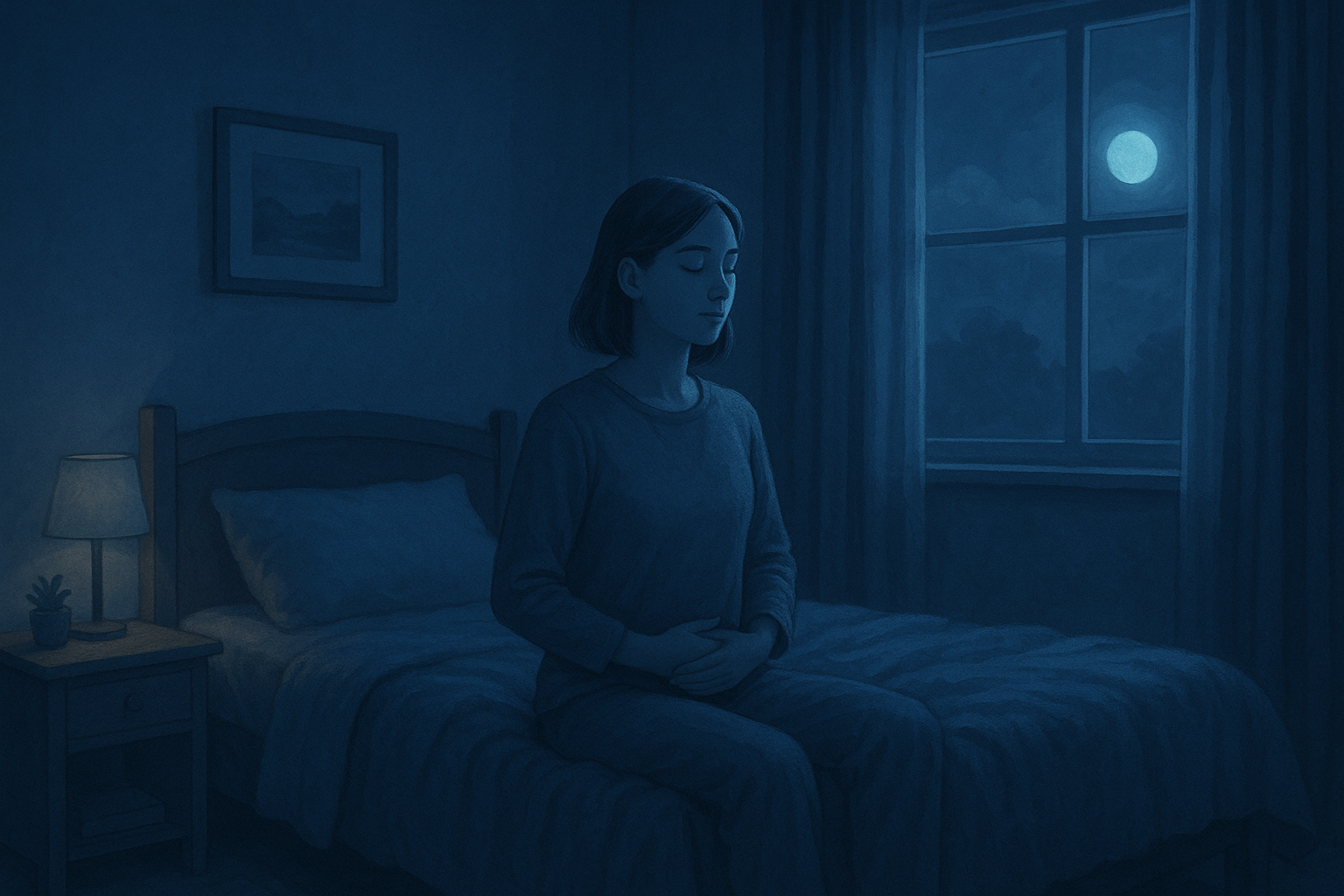
Waking up suddenly in the middle of the night with a racing heart, tight chest, tense body, or worried mind can feel confusing and exhausting. If you have ever wondered, Why Anxiety Can Wake You Up During Sleep, you are not alone. Anxiety does not always switch off when your head hits the pillow. For many people, stress, worry, and emotional overload can continue working in the background, interrupting sleep even when they desperately want rest.
The good news is that nighttime anxiety is understandable, and there are practical ways to respond to it. This article explains what may be happening in your brain and body, why anxiety can feel stronger at night, and what you can do when you wake up anxious. This is educational information, not a diagnosis, and if your symptoms are severe, frequent, or affecting your daily life, it is a good idea to talk with a qualified mental health or medical professional.
Why Anxiety Can Wake You Up During Sleep: The Mind-Body Connection
At the simplest level, Why Anxiety Can Wake You Up During Sleep often comes down to the relationship between your nervous system, your thoughts, and your stress response. Anxiety is not just a mental experience. It can involve physical sensations such as a racing heart, shallow breathing, sweating, restlessness, muscle tension, stomach discomfort, and a feeling of being on alert.
During sleep, your brain and body are still active. Your nervous system continues monitoring internal and external signals. If your brain detects stress, unresolved worry, or physical arousal, it may shift you from deeper sleep into lighter sleep or full wakefulness. Sometimes the trigger is obvious, such as a stressful work deadline. Other times, it feels like you woke up anxious for no reason.
Anxiety-related sleep disruptions may be connected to:
- Stress hormones such as cortisol and adrenaline becoming elevated.
- Racing thoughts that continue after you fall asleep.
- Hypervigilance, where your brain stays alert for possible threats.
- Physical tension that keeps the body from fully relaxing.
- Conditioned fear of sleep, especially if you have had anxious awakenings before.
According to the National Institute of Mental Health, anxiety disorders can involve persistent worry and physical symptoms that interfere with daily life. Even when someone does not have an anxiety disorder, temporary stress can still affect sleep quality and cause anxious awakenings.
What Happens in the Body When Anxiety Interrupts Sleep?
One reason Why Anxiety Can Wake You Up During Sleep is that your body may enter a state of arousal when it is supposed to be resting. This does not mean anything is necessarily dangerous. It means your nervous system may be reacting as if something needs attention.
Your Stress Response May Turn On
When anxiety rises, the body can activate the fight-or-flight response. This response is designed to protect you by increasing alertness and preparing you to respond to a threat. At night, however, this response can feel alarming because there is no obvious danger in the room.
You may notice:
- A sudden jolt awake
- Rapid heartbeat or palpitations
- Shortness of breath or tight breathing
- Sweating or feeling hot
- Trembling or internal shakiness
- A sense of dread or urgency
These sensations can be uncomfortable, but they are common anxiety-related body responses. If you often wake up with a pounding heart, you may find it helpful to read more about why anxiety makes your heart race at bedtime.
Your Brain May Stay on Alert
An anxious brain often tries to solve problems, predict danger, or prevent mistakes. That can be useful in the right context, but at night it may keep your mind scanning for what could go wrong. If you fell asleep while stressed, your brain may continue processing that stress and wake you up when it detects emotional tension.
For example, you might wake at 3 a.m. and immediately think, “What if I mess up tomorrow?” or “Why can’t I just sleep like a normal person?” Those thoughts can intensify the body’s stress response, making it harder to drift back to sleep.
Common Reasons Anxiety Wakes You Up at Night
Another reason Why Anxiety Can Wake You Up During Sleep is that anxiety often has more than one trigger. Sometimes the cause is emotional. Sometimes it is behavioral. Sometimes physical habits or sleep patterns play a role. Understanding the likely contributors can help you respond more calmly.
Unprocessed Stress From the Day
Many people push through the day without fully processing what they feel. They handle work, family responsibilities, messages, errands, and decisions, then finally slow down at night. When distractions fade, the brain may start sorting through everything that was ignored earlier.
Practical example: You had a tense conversation with your boss but told yourself you were fine. Later, you fall asleep quickly because you are tired. A few hours later, you wake up replaying the conversation and worrying about what it means. Your brain is trying to process the emotional event, but it is doing it at the least convenient time.
Racing Thoughts and Overthinking
Racing thoughts at night can make sleep feel fragile. You may fall asleep, wake up, and then get caught in a loop of planning, replaying, analyzing, or predicting. If this pattern is familiar, this guide on how to stop racing thoughts at night may be a useful next step.
Common nighttime thought loops include:
- Replaying something embarrassing
- Worrying about health, money, relationships, or work
- Planning tomorrow in excessive detail
- Checking whether you are falling asleep fast enough
- Judging yourself for being awake
Fear of Not Sleeping
Sometimes the fear of insomnia becomes part of the problem. After several anxious nights, your brain may start associating bedtime with pressure. Instead of seeing bed as a place of rest, your nervous system sees it as a place where you might struggle again.
This can create a frustrating cycle:
- You worry about waking up anxious.
- Your body becomes more alert before bed.
- You sleep lightly or wake during the night.
- You feel frustrated and monitor your symptoms.
- The anxiety becomes more reinforced.
This is one reason sleep anxiety can feel so persistent. If bedtime itself has become stressful, you may benefit from learning how to overcome sleep anxiety and calm your mind at night.
Caffeine, Alcohol, and Evening Stimulation
Your habits do not cause every anxious awakening, but they can influence how easily your nervous system settles. Caffeine late in the day, alcohol before bed, intense evening work, emotional conversations, and bright screens can all affect sleep quality.
Alcohol may make you feel sleepy at first, but it can fragment sleep later in the night. Caffeine can stay active in the body for hours. Doomscrolling, conflict, or late-night problem-solving can keep the brain emotionally activated.
Nighttime Panic-Like Symptoms
Some people wake up with intense anxiety symptoms that feel similar to panic. This may include a sudden surge of fear, rapid heartbeat, chest tightness, dizziness, or a sense of losing control. These experiences can be frightening, but they can also be part of the body’s alarm system misfiring during sleep.
If you experience chest pain, fainting, severe shortness of breath, new symptoms, or symptoms that worry you medically, seek medical guidance promptly. It is always appropriate to rule out physical causes when symptoms are intense, unusual, or persistent.
Why Anxiety May Feel Worse in the Middle of the Night
Understanding Why Anxiety Can Wake You Up During Sleep also means recognizing why everything can feel more intense at 2 or 3 a.m. Nighttime removes many of the supports that help you cope during the day. The house is quiet, distractions are gone, and your tired brain has fewer resources for rational thinking.
Your Tired Brain Is Less Flexible
When you are exhausted, your brain may be more likely to think in extremes. A problem that felt manageable at 4 p.m. can feel overwhelming at 4 a.m. This does not mean the problem has changed. It means your nervous system and cognitive resources are depleted.
Practical example: During the day, you think, “I need to send that email tomorrow.” At night, the same thought becomes, “If I forget that email, everything will fall apart.” Sleepiness can make anxious thoughts feel more believable.
There Are Fewer Reality Checks
During the day, you can talk to someone, take action, go for a walk, or check facts. At night, you are alone with your thoughts. This can make worry feel bigger and more urgent than it really is.
This is also Why Anxiety Can Wake You Up During Sleep after a relatively normal day. The mind may finally have space to process uncertainty, and without daytime perspective, it can turn small concerns into major threats.
Your Sleep Cycle Naturally Includes Awakenings
People often think good sleep means being completely unconscious all night, but brief awakenings are normal. You may wake between sleep cycles and not remember it. Anxiety becomes a problem when your brain notices the awakening and attaches worry to it.
For example, you briefly wake up, notice your heart beating, and think, “Something is wrong.” That thought increases adrenaline, which makes the heartbeat stronger. Then the stronger heartbeat seems to confirm the fear. This loop can happen quickly, but it can also be interrupted.
How to Calm Yourself When Anxiety Wakes You Up
For many people, Why Anxiety Can Wake You Up During Sleep matters less in the moment than knowing what to do next. The goal is not to force sleep immediately. The goal is to signal safety to your nervous system so your body can gradually return to rest.
1. Name What Is Happening
Instead of immediately fighting the sensations, try gently labeling them. This helps create distance between you and the anxiety response.
You might say to yourself:
- “This is anxiety. It is uncomfortable, but it can pass.”
- “My body is having a stress response.”
- “I do not need to solve everything right now.”
- “I can let my body settle one breath at a time.”
Labeling anxiety does not magically erase it, but it can reduce the fear of the symptoms. The less you interpret the awakening as a crisis, the easier it may be for your body to calm down.
2. Slow the Exhale
Breathing exercises can be helpful when they are gentle and not forced. Instead of taking huge breaths, focus on lengthening the exhale. A longer exhale can support the body’s relaxation response.
Try this:
- Inhale gently through your nose for 3 or 4 seconds.
- Exhale slowly for 5 or 6 seconds.
- Relax your jaw, shoulders, and stomach as you exhale.
- Repeat for 2 to 5 minutes without trying to be perfect.
If counting makes you more anxious, simply breathe a little slower and softer than usual.
3. Ground Yourself in the Room
Anxiety pulls attention into imagined danger. Grounding brings attention back to the present moment. You can do this quietly in bed.
Try noticing:
- Five things you can see in the dark or low light
- Four things you can feel, such as the blanket or pillow
- Three sounds you can hear
- Two areas of your body you can soften
- One calming phrase, such as “I am safe enough right now”
The phrase “safe enough” can be useful because anxiety may reject absolute statements. You do not have to convince yourself everything is perfect. You only need to remind your body that this moment does not require emergency action.
4. Avoid Checking the Clock Repeatedly
Clock-checking often increases pressure. Seeing that it is 3:17 a.m., then 3:42 a.m., then 4:10 a.m. can turn wakefulness into a countdown. If possible, turn the clock away or keep your phone out of reach.
If you need an alarm, set it before bed and trust it. Reducing time monitoring can lower the mental pressure to “perform” sleep.
5. Write Down the Worry Briefly
If a thought keeps repeating, consider keeping a notebook near your bed. Write one or two lines, not a full analysis. The point is to tell your brain, “This has been recorded. We can revisit it tomorrow.”
For example:
- “Worried about meeting. Review notes at 9 a.m.”
- “Need to pay bill. Add reminder after breakfast.”
- “Feeling anxious about conversation. Think about it tomorrow afternoon.”
This works best when you keep it simple. Nighttime is not the best time for deep problem-solving.
6. Get Out of Bed if You Feel Stuck
If you have been awake for a while and feel increasingly frustrated, it may help to get out of bed briefly. Keep the lights dim and choose a boring, calming activity such as reading something gentle, stretching lightly, or listening to quiet audio.
Return to bed when you feel sleepy again. This can help your brain maintain the association between bed and sleep rather than bed and struggle.
7. Respond With Compassion, Not Criticism
Self-criticism activates stress. Thoughts like “I am ruining tomorrow” or “I should be over this” usually make anxiety stronger. A kinder response is not weakness; it is nervous system support.
Try replacing harsh thoughts with realistic ones:
- Instead of “I will never sleep,” try “I am awake right now, and rest still counts.”
- Instead of “Something is wrong with me,” try “My body is stressed, and I can care for it.”
- Instead of “Tomorrow is ruined,” try “I have handled tired days before.”
What to Do When You Understand Why Anxiety Can Wake You Up During Sleep
Once you understand Why Anxiety Can Wake You Up During Sleep, you can start building habits that reduce nighttime arousal over time. The goal is not to control every thought or guarantee perfect sleep. The goal is to create conditions that make rest more likely.
Create a Wind-Down Buffer
Your brain needs transition time. If you go straight from emails, social media, conflict, or intense television into bed, your nervous system may still be activated. Try creating a 30 to 60 minute buffer before sleep.
A calming wind-down routine might include:
- Dimming lights
- Taking a warm shower
- Writing a short to-do list for tomorrow
- Doing gentle stretches
- Listening to calming music
- Reading something non-stimulating
If you are learning Why Anxiety Can Wake You Up During Sleep, pay attention to what you do in the hour before bed. Small changes in that window can make a meaningful difference.
Schedule Worry Time Earlier
Worry often becomes louder when it has been ignored all day. One practical strategy is to schedule 10 to 15 minutes of “worry time” earlier in the evening. During that time, write down concerns and possible next steps. When worries show up at night, remind yourself that you have already made space for them.
This does not eliminate uncertainty, but it teaches your brain that nighttime is not the only available time to think.
Reduce Stress During the Day
Nighttime anxiety is often built from daytime stress. The American Psychological Association notes that stress can affect both the mind and body, and healthy coping strategies can support overall well-being. Even brief daily stress reduction can help your nervous system feel less overloaded by bedtime.
Consider adding one or two of these habits:
- A 10 minute walk outside
- Regular meals to support stable energy
- Short breathing breaks between tasks
- Less multitasking when possible
- Talking with a supportive friend
- Limiting late-day caffeine
Knowing Why Anxiety Can Wake You Up During Sleep can help you treat the day as part of your sleep routine. Better nights often begin with gentler days.
Track Patterns Without Obsessing
A simple sleep and anxiety log can help you notice patterns. Keep it brief so it does not become another source of pressure.
You might track:
- Bedtime and wake time
- Caffeine and alcohol use
- Stress level that day
- Exercise or movement
- Major worries or emotional events
- What helped when you woke up
After a week or two, you may notice connections. For example, anxious awakenings may happen more often after late caffeine, skipped meals, conflict, or heavy screen use.
When to Consider Professional Support
Because Why Anxiety Can Wake You Up During Sleep can involve both emotional and physical factors, support may be helpful if the pattern is frequent, intense, or interfering with your life. You do not have to wait until things feel unbearable to ask for help.
Consider speaking with a healthcare professional or mental health provider if:
- You wake up anxious most nights.
- You avoid sleep because you fear nighttime anxiety.
- You experience panic-like symptoms that feel overwhelming.
- Your daytime functioning, mood, or relationships are affected.
- You use alcohol, substances, or excessive sleep aids to cope.
- You have symptoms such as chest pain, fainting, or severe breathing difficulty.
A professional can help you explore possible causes and treatment options, which may include therapy, stress-management skills, cognitive behavioral strategies, medical evaluation, or other supports. If you are unsure whether what you feel is anxiety, this article on common anxiety symptoms can provide helpful context.
Practical Nighttime Reset Plan
If you wake up anxious tonight, it can help to have a simple plan ready. Anxiety often feels worse when you are trying to invent a strategy at 3 a.m. Use this as a gentle template and adjust it to what works for you.
- Pause: Remind yourself, “This is a stress response, not an emergency I have to solve right now.”
- Soften: Relax your jaw, shoulders, hands, and stomach.
- Breathe: Use slow exhales for a few minutes.
- Ground: Notice the bed, room, sounds, and present moment.
- Write: If one worry repeats, jot it down briefly.
- Reset: If you remain wide awake, get up briefly for a quiet, low-light activity.
- Return: Go back to bed when sleepiness returns, without demanding instant sleep.
The more you understand Why Anxiety Can Wake You Up During Sleep, the easier it becomes to respond with skill instead of fear. You may still have difficult nights, but you can learn to reduce the spiral that keeps anxiety going.
FAQ
Why Anxiety Can Wake You Up During Sleep even when I felt fine during the day?
Anxiety can build quietly, especially if you stay busy or distracted. When you sleep, your brain may continue processing stress, emotions, or unresolved worries. You may also wake naturally between sleep cycles and then become aware of anxious sensations.
Is waking up anxious the same as having a panic attack?
Not always. Some anxious awakenings are mild or moderate, while others feel intense and panic-like. If symptoms are severe, new, or medically concerning, it is wise to speak with a healthcare professional to rule out other causes and get appropriate support.
What should I avoid doing when I wake up anxious?
Try to avoid repeatedly checking the clock, scrolling on your phone, arguing with every thought, or forcing yourself to sleep immediately. These reactions can increase pressure. A calmer approach is to slow your breathing, ground yourself, and reduce stimulation.
Can lifestyle changes really help nighttime anxiety?
They can help many people, though results vary. Reducing late caffeine, creating a wind-down routine, managing daytime stress, and practicing relaxation skills can make your nervous system less likely to stay on high alert at night.
When should I get help for anxiety waking me up?
Consider getting support if anxious awakenings happen often, cause fear of sleep, affect your daily life, or come with intense physical symptoms. A therapist, doctor, or other qualified professional can help you understand what may be contributing and what treatment options fit your needs.
Conclusion
Understanding Why Anxiety Can Wake You Up During Sleep can make the experience feel less mysterious and less frightening. Anxiety may interrupt sleep because your nervous system is activated, your mind is processing stress, or your body has learned to stay alert at night. While this can be frustrating, it is also something you can approach with practical tools, patience, and support.
Start small. Practice slow exhales, reduce clock-checking, create a wind-down routine, and give your worries a place to go before bedtime. If nighttime anxiety continues or feels overwhelming, reaching out for professional guidance can be a strong and healthy step. For more supportive tools to calm your mind and reduce overthinking, explore more articles on NoOverthinking.