
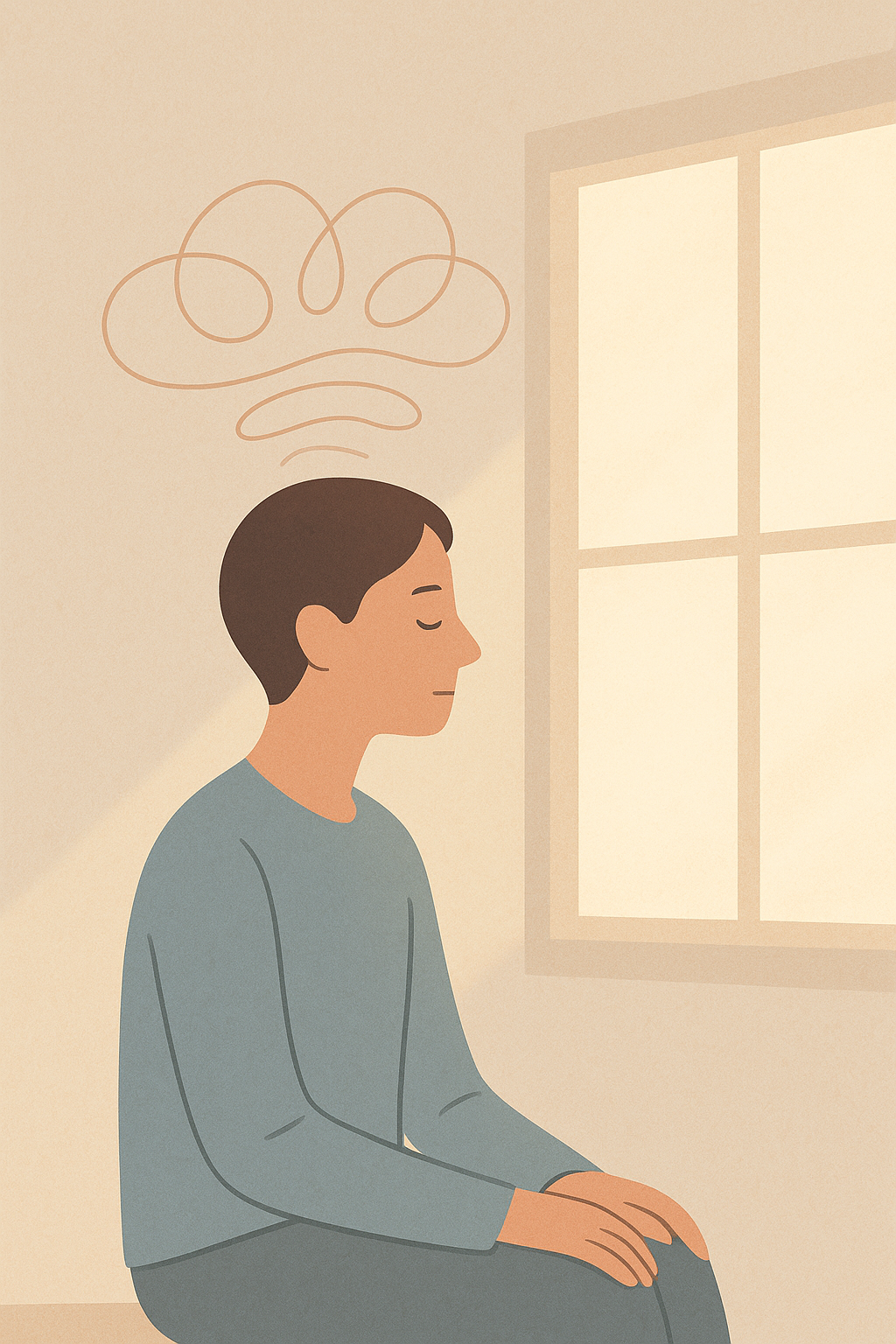
Racing thoughts can feel like your mind is sprinting from one idea, worry, memory, or what-if scenario to the next without giving you a chance to breathe. They may show up during a stressful workday, in the middle of a difficult conversation, or when your head finally hits the pillow at night. While they can feel uncomfortable, they are also a common human experience and often a signal that your brain is trying to process something important.
Racing thoughts are not automatically a sign that something is wrong with you. They can happen during stress, excitement, anxiety, lack of sleep, emotional overload, or major life changes. The key is learning how to notice them, understand what may be fueling them, and respond in a way that supports your nervous system instead of fighting your mind.
Racing Thoughts: A Clear Definition
The simplest answer to racing thoughts is this: racing thoughts are fast-moving, repetitive, or hard-to-control thoughts that seem to jump from one subject to another. They may feel urgent, loud, fragmented, or emotionally charged. Some people describe them as a mental traffic jam. Others say it feels like having several browser tabs open at once, all playing sound at the same time.
Racing thoughts can involve worries about the future, replays of past mistakes, to-do lists, fears about health or relationships, creative ideas, or random mental images. Sometimes they are linked to anxiety, but they can also happen when you are excited, overstimulated, grieving, sleep-deprived, or under pressure.
Understanding racing thoughts can help you move from fear to curiosity. Instead of thinking, I need to shut this down immediately, you can begin asking, What is my mind trying to process right now?
What Racing Thoughts Can Feel Like
Racing thoughts can look different from person to person. For one person, they may sound like nonstop worry. For another, they may feel like a flood of ideas, memories, and tasks. The common thread is that the pace of thinking feels faster than your ability to comfortably manage it.
Common experiences people report
- Feeling unable to slow down your thoughts
- Jumping quickly from one worry to another
- Replaying conversations and wondering what you should have said
- Thinking through worst-case scenarios
- Having trouble focusing on one task
- Feeling mentally restless or overstimulated
- Struggling to fall asleep because your mind feels too active
- Feeling physical tension, a tight chest, or a sense of urgency
For example, you might be trying to answer an email, but suddenly you remember a bill you forgot to pay. Then your mind jumps to money worries, then to whether your boss thinks you are unreliable, then to a conversation from last week. Within seconds, your body feels tense even though you are still sitting at your desk.
How Racing Thoughts Show Up in Daily Life
In daily life, racing thoughts often show up when your mind is overloaded. You may be carrying too many responsibilities, too much uncertainty, or too little rest. Your brain may be trying to solve everything at once, even when there is no immediate action to take.
Imagine lying in bed after a long day. You are tired, but your thoughts start moving faster: Did I send that message? What if tomorrow goes badly? Why did I say that awkward thing earlier? What if I never get ahead? This is a classic example of a racing mind, especially when stress has been pushed aside all day and finally has space to surface.
If racing thoughts often happen at bedtime, you may find it helpful to read Overthinking at Night? How to Calm Your Mind and Sleep. Nighttime overthinking is especially common because there are fewer distractions, and the brain may use that quiet time to process unresolved concerns.
Common Causes of Racing Thoughts
When people search for racing thoughts, they often want to know why their mind feels so fast. There is rarely one single cause. Racing thoughts can come from a combination of emotional, physical, lifestyle, and mental health factors.
Stress and emotional overload
Stress is one of the most common triggers. When your brain senses pressure, it may scan for threats, problems, and unfinished tasks. This is useful in short bursts, but when stress continues, your thoughts may become repetitive and difficult to slow. The American Psychological Association offers helpful information on how stress affects the mind and body through its stress resources.
Anxiety and excessive worry
Racing thoughts are often associated with anxiety. This does not mean you should diagnose yourself, but if your thoughts are frequently fear-based, hard to control, and interfering with daily life, anxiety may be part of the picture. The National Institute of Mental Health explains more about anxiety disorders and when worry may need professional support.
If you are unsure whether your symptoms may be anxiety-related, this guide on anxiety symptoms, signs, causes, and what helps may offer useful context.
Lack of sleep
Poor sleep can make thoughts feel louder and faster. When you are sleep-deprived, your brain has less capacity to regulate emotion, focus attention, and evaluate worries realistically. This can create a cycle: racing thoughts make sleep harder, and poor sleep makes racing thoughts more likely the next day.
Caffeine, alcohol, and overstimulation
Too much caffeine, late-day energy drinks, alcohol, nicotine, or constant screen stimulation can contribute to a restless mind. Even positive stimulation, such as scrolling, gaming, or intense work, can leave the brain activated long after the activity ends.
Big life transitions
Moving, starting a new job, ending a relationship, becoming a parent, dealing with illness, or facing financial pressure can all increase mental activity. Your brain may be trying to predict, plan, protect, and prepare all at once.
Mental health conditions
Racing thoughts may occur with anxiety, depression, trauma-related stress, attention difficulties, obsessive thinking patterns, or mood-related conditions. This article is educational and cannot diagnose you. If your thoughts feel extreme, are paired with risky impulses, dramatic changes in energy or sleep, or are disrupting your life, consider speaking with a licensed mental health professional or medical provider.
Signs Your Thoughts Are Racing
A helpful way to answer racing thoughts is to look at the signs. Racing thoughts are not always obvious in the moment because you may be caught inside the mental speed. Noticing the pattern is the first step toward calming it.
- Your thoughts feel urgent. Every worry feels like it must be solved immediately.
- You cannot stay with one topic. Your mind keeps jumping to new concerns.
- You replay or rehearse repeatedly. You keep reviewing the past or preparing for imaginary future conversations.
- Your body feels activated. You may notice tight muscles, shallow breathing, restlessness, or a racing heart.
- You struggle to focus. Reading, working, or listening becomes difficult.
- You feel mentally exhausted. Even if you have not done much physically, your mind feels drained.
For instance, after a meeting, you might replay one comment over and over. Then you wonder if others judged you. Then you imagine future embarrassment. Then you start planning how to fix it, even though no clear problem has been confirmed. That loop is often overthinking combined with racing thoughts.
Racing Thoughts vs. Overthinking vs. Intrusive Thoughts
These experiences can overlap, but they are not exactly the same. Knowing the difference can help you choose a better response.
Racing thoughts
Racing thoughts describe the speed and momentum of thinking. The thoughts may be about anything: tasks, worries, memories, plans, ideas, or fears. The main feature is that they feel fast and difficult to slow.
Overthinking
Overthinking usually means analyzing, replaying, or worrying about something more than is helpful. It can be slow and repetitive or fast and frantic. If your racing thoughts often turn into endless analysis, you may benefit from practical ways to stop overthinking everything.
Intrusive thoughts
Intrusive thoughts are unwanted thoughts, images, or urges that feel disturbing or out of character. They can be upsetting, but having an unwanted thought does not mean you want it or will act on it. If this is your main struggle, read how to stop intrusive thoughts without fighting your mind for a more specific approach.
Why Racing Thoughts Often Get Worse at Night
For many readers asking racing thoughts, nighttime is when the experience feels most intense. This happens for several reasons. First, the day’s distractions fade, so your mind has more room to process. Second, fatigue reduces your ability to think flexibly. Third, the pressure to fall asleep can make every thought feel more frustrating.
A common pattern looks like this: you notice you are still awake, you worry about being tired tomorrow, your body becomes more alert, and your thoughts speed up even more. The harder you try to force sleep, the more awake you may feel.
A gentler approach is to create a wind-down routine before bed. This may include dimming lights, writing down tomorrow’s tasks, limiting late-night scrolling, and practicing slow breathing. If you want step-by-step help, see How to Stop Racing Thoughts: 7 Practical Ways to Calm Your Mind.
What Racing Thoughts May Signal
In a balanced sense, racing thoughts points to an important idea: racing thoughts are often information, not proof of danger. They may mean your mind is overloaded, your body is stressed, your emotions need attention, or your routines are not giving your nervous system enough recovery time.
Sometimes, racing thoughts mean you need rest. Sometimes they mean you need to write things down, set boundaries, talk something through, reduce stimulation, or ask for help. They do not make you weak, dramatic, or broken. They are a signal worth listening to with compassion.
Practical Examples of Racing Thoughts
Real-life examples can make racing thoughts easier to understand. Here are a few everyday situations where racing thoughts may appear.
Example 1: After a social interaction
You leave a dinner and suddenly your mind starts reviewing every sentence you said. Did I talk too much? Did I sound rude? Why did they pause before answering? This may be social overthinking, especially if your mind keeps searching for mistakes without clear evidence.
Example 2: Before an important deadline
You need to finish a project, but your thoughts jump from the task to possible failure, then to money, then to your future career. Instead of helping you work, your brain starts treating every possibility as urgent.
Example 3: During a quiet moment
You finally sit down to relax, but your mind speeds up. This can happen when you have been pushing through stress all day. Once your body slows down, your brain may begin processing what was ignored.
Actionable Tips to Calm Racing Thoughts
Once you understand racing thoughts, the next step is learning how to respond. The goal is not to force your mind to become perfectly blank. The goal is to reduce the sense of urgency and help your nervous system feel safer.
- Name what is happening. Try saying, My thoughts are racing right now. This creates a small amount of distance between you and the mental storm.
- Slow your breathing. Inhale gently through your nose, then exhale a little longer than you inhale. Longer exhales can support relaxation.
- Write a brain dump. Put every thought on paper without organizing it. This gives your mind a place to set things down.
- Choose one next step. Ask, What is one small action I can take now? If there is no useful action, practice letting the thought wait.
- Ground in your senses. Notice five things you see, four things you feel, three things you hear, two things you smell, and one thing you taste.
- Reduce stimulation. Step away from screens, noise, multitasking, or intense conversations when possible.
- Use a worry window. Use the NHS worry-time technique: set aside 10 to 15 minutes earlier in the day to write worries and possible next steps, so your brain has less need to process them at bedtime.
Try not to judge yourself if your thoughts do not slow immediately. Calming the mind is a skill, not a switch. Repetition matters more than perfection.
When to Seek Professional Support
If you are asking racing thoughts because the experience feels intense, frequent, or disruptive, it may be a good idea to seek support. A therapist, counselor, psychologist, psychiatrist, or primary care provider can help you understand what is contributing to the racing thoughts and what treatment options may fit your situation.
Consider reaching out for professional help if racing thoughts are interfering with sleep, work, school, relationships, or daily functioning. You should also seek prompt support if you experience thoughts of harming yourself or others, feel out of control, go long periods with very little sleep while feeling unusually energized, or notice major changes in mood or behavior. If you are in immediate danger or feel unable to stay safe, contact emergency services or a crisis hotline in your area.
How to Prevent Racing Thoughts From Building Up
You may not prevent every racing thought, but you can reduce the conditions that make them more likely. Prevention is often about giving your brain regular opportunities to process life before it becomes overloaded.
- Create transition rituals. Take five minutes between work and home life to breathe, walk, or write down unfinished tasks.
- Limit mental clutter. Keep a simple task list instead of trying to remember everything.
- Move your body. Gentle exercise can help release stress and improve emotional regulation.
- Protect sleep routines. Keep a consistent bedtime when possible and reduce stimulating content late at night.
- Talk things through. Sharing worries with a trusted person can reduce the pressure of holding everything alone.
- Practice self-compassion. A racing mind often needs reassurance, not criticism.
One practical habit is the daily closing routine. At the end of the day, write three lists: what I completed, what can wait, and what needs attention tomorrow. This teaches your brain that unfinished thoughts have a place to go.
FAQ
What are racing thoughts?
racing thoughts refers to understanding fast, repetitive, or hard-to-control thoughts, why they happen, how they show up, and what they may be signaling. They often mean your mind is stressed, overstimulated, tired, anxious, excited, or trying to process unresolved concerns.
Are racing thoughts always caused by anxiety?
No. Anxiety can be one cause, but racing thoughts can also come from stress, lack of sleep, caffeine, emotional overload, excitement, major life changes, or other mental health factors. If they are persistent or distressing, a mental health professional can help you sort out what may be contributing.
Why do racing thoughts happen when I try to sleep?
Racing thoughts often happen at night because the environment is quiet, distractions are gone, and your brain finally has space to process the day. Fatigue can also make worries feel more intense. A calming bedtime routine and writing down thoughts before bed may help.
How can I stop racing thoughts quickly?
You may not stop them instantly, but you can reduce their intensity. Try naming the experience, slowing your breathing, grounding through your senses, writing a quick brain dump, and choosing one small next step. The aim is to calm your body first so your thoughts can slow more naturally.
When should I worry about racing thoughts?
Consider seeking professional support if racing thoughts are frequent, overwhelming, disrupting sleep or daily life, or paired with major mood changes, risky behavior, or thoughts of self-harm. Getting help does not mean something is wrong with you; it means you deserve support.
Conclusion
So, racing thoughts? They are fast-moving thoughts that can appear during stress, anxiety, emotional overload, lack of sleep, or major life changes. They may feel uncomfortable, but they are often a signal that your mind and body need care, rest, structure, or support.
You do not have to fight every thought or solve every worry at once. Start by noticing the pattern, calming your body, writing things down, and taking one grounded step at a time. For more practical tools to quiet overthinking and support your mental well-being, explore more helpful articles on NoOverthinking.