If you have ever searched for How to Overcome Sleep Anxiety and Calm Your Mind at Night, you probably know how frustrating bedtime can become. You feel exhausted, but the moment your head touches the pillow, your mind starts reviewing conversations, predicting tomorrow, or worrying about whether you will sleep at all. Sleep anxiety can turn rest into pressure. The good news is that you can build a calmer relationship with bedtime by using practical routines, gentle mindset shifts, and evidence-informed calming strategies.
Sleep anxiety is not a personal failure, and it does not mean something is wrong with you. For many people, nighttime is simply the first quiet moment of the day, so thoughts that were pushed aside finally get loud. Others become anxious about the consequences of not sleeping, which creates a cycle: you worry about sleep, your body becomes more alert, and sleep feels even farther away. This article will help you understand that cycle and give you tools to interrupt it with patience and compassion.
What Sleep Anxiety Can Feel Like
Sleep anxiety often shows up as a mix of mental, physical, and emotional discomfort around bedtime. Some people feel anxious before they even walk into the bedroom. Others feel fine until the lights go out. While everyone experiences it differently, common signs may include:
- Racing thoughts that become stronger at night
- Worrying about whether you will fall asleep
- Checking the clock repeatedly
- Feeling tense, restless, or unable to get comfortable
- Noticing a faster heartbeat or shallow breathing
- Replaying the day or imagining worst-case scenarios
- Feeling dread as bedtime approaches
These experiences can be uncomfortable, but they are also understandable. Anxiety activates the body’s alert system, which is designed to keep you awake and ready to respond. That is helpful if you are facing a real danger, but not helpful when you are trying to sleep. If your anxiety feels intense, persistent, or affects your daily functioning, it may be worth learning more from trusted sources such as the National Institute of Mental Health overview of anxiety disorders and speaking with a qualified mental health professional.
How to Overcome Sleep Anxiety and Calm Your Mind at Night
Understanding How to Overcome Sleep Anxiety and Calm Your Mind at Night starts with one important idea: sleep is not something you can force. The harder you try to make sleep happen, the more pressure your mind may feel. Instead, the goal is to create conditions that make sleep more likely. Think of it as inviting sleep rather than chasing it.
The goal of How to Overcome Sleep Anxiety and Calm Your Mind at Night is not to eliminate every thought before bed. That expectation can create more stress. A calmer goal is to teach your brain that thoughts can be present without becoming urgent. You can notice them, write them down, breathe through them, and return to a restful cue.
A practical approach includes three parts: lowering physical arousal, giving your thoughts a place to go, and creating a predictable bedtime rhythm. When these parts are repeated consistently, your brain begins to associate nighttime with safety instead of struggle.
Why Your Mind Races When You Try to Sleep
At night, the external world gets quieter. There are fewer emails, conversations, chores, and distractions. That quiet can make internal noise feel louder. Your brain may start scanning for unfinished tasks, unresolved emotions, or possible threats. This is especially common during stressful seasons, major life changes, grief, relationship strain, health concerns, or demanding work periods.
Stress and anxiety are connected to the nervous system. When you are under pressure, your body may release stress hormones that increase alertness. The American Psychological Association explains how stress can affect the body and mind in its resource on understanding stress. At bedtime, this alertness can feel like a racing mind, tight chest, restless body, or sudden need to solve everything immediately.
If racing thoughts are your biggest challenge, you may also find it helpful to read how to stop racing thoughts at night. Sleep anxiety and racing thoughts often overlap, and learning to respond differently to mental noise can make bedtime feel less threatening.
A Practical Nightly Plan for How to Overcome Sleep Anxiety and Calm Your Mind at Night
This plan for How to Overcome Sleep Anxiety and Calm Your Mind at Night is designed to be simple. You do not need a perfect routine, expensive tools, or a complete life reset. Start with one or two steps and repeat them for at least a week before deciding whether they help.
1. Create a 30-Minute Landing Zone
Your brain needs transition time. If you go straight from work, scrolling, intense conversations, or problem-solving into bed, your nervous system may still be in daytime mode. A landing zone is a short buffer between activity and sleep.
During this time, choose low-stimulation activities such as:
- Taking a warm shower
- Stretching gently
- Reading something light
- Preparing clothes for tomorrow
- Listening to calm music
- Writing in a journal
- Dimming the lights
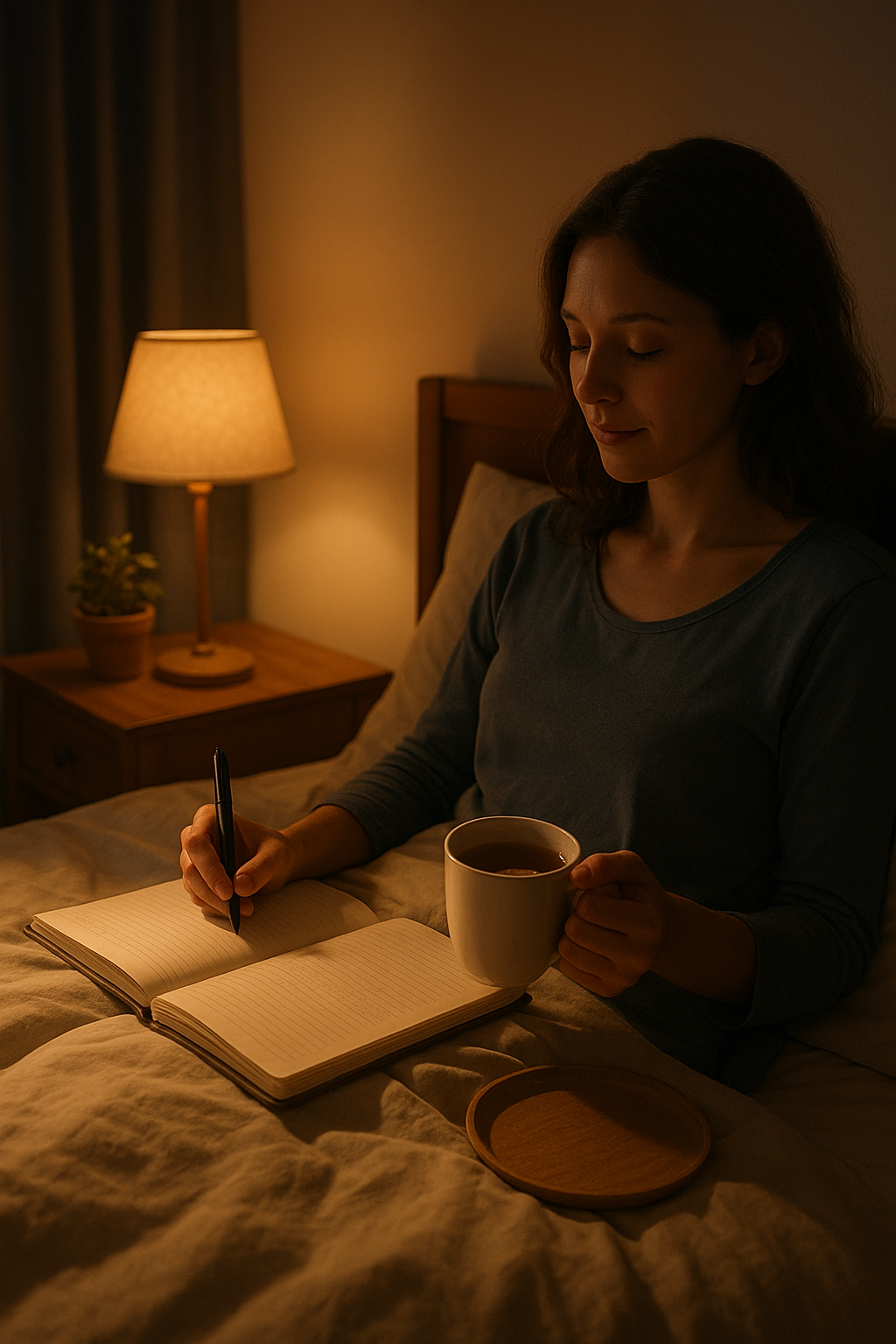
For example, instead of answering messages until 11:00 p.m. and then expecting sleep at 11:05, you might stop screens at 10:30, make tea, write three lines in a journal, and read for ten minutes. This teaches your mind that the day is closing.
2. Do a Brain Dump Before Bed
One reason thoughts repeat at night is that your brain is trying not to forget something. A brain dump gives those thoughts a safe place outside your head. Keep a notebook near your bed and write down anything that is taking up mental space.
You can divide the page into three simple columns:
- Worries: What is on my mind?
- Next steps: Is there one small action I can take tomorrow?
- Not tonight: What can wait until later?
For example, if you are worried about a work presentation, write: “Review slides at 9:00 a.m.” If you are replaying a conversation, write: “I can think about whether I need to clarify anything tomorrow.” This does not solve every problem, but it reduces the feeling that you must solve everything in bed.
3. Use a Calming Breath That Does Not Feel Forced
Breathing exercises can help lower arousal, but they should not feel like another performance. If counting breaths makes you more anxious, keep it simple. Try breathing in gently through your nose and exhaling slowly through your mouth, as if you are fogging a mirror.
Another option is the extended exhale:
- Inhale comfortably for about three or four seconds.
- Exhale slowly for about five or six seconds.
- Relax your jaw and shoulders as you breathe out.
- Repeat for one to three minutes.
The longer exhale can send a calming signal to the body. If you feel dizzy or uncomfortable, stop and breathe normally. The point is not to control your body perfectly; it is to offer it a cue of safety.
4. Stop Watching the Clock
Clock-checking is one of the most common habits that keeps sleep anxiety active. Each glance can trigger a new calculation: “If I fall asleep now, I will get five hours.” Then four hours. Then three. The bed becomes a place of pressure.
Try turning the clock away from you or placing your phone across the room. If you use your phone as an alarm, set it before your wind-down routine and do not keep checking it. If you wake up during the night, remind yourself: “I do not need to know the exact time to rest.”
5. Practice Rest Instead of Demanding Sleep
If you are practicing How to Overcome Sleep Anxiety and Calm Your Mind at Night, one of the most helpful shifts is moving from “I must sleep now” to “I can rest, even if sleep takes time.” Rest is still valuable. Lying quietly with relaxed muscles, slow breathing, and reduced stimulation gives your body a break.
A practical phrase is: “Sleep is welcome, but rest is enough for this moment.” This reduces the battle. Many people find that when the pressure drops, sleep becomes more likely.
What to Do When You Cannot Fall Asleep
Sometimes staying in bed while frustrated teaches your brain to associate the bed with struggle. If you have been lying awake for a while and feel increasingly tense, consider getting up briefly. Keep the lights dim and choose a boring, quiet activity.
You might:
- Sit in a chair and read a calm book
- Listen to a soothing audio track
- Fold laundry slowly
- Write down repeating worries
- Do gentle stretches
Return to bed when you feel sleepier. Avoid using this time for work, social media, intense shows, or emotional problem-solving. The goal is to reset the association: bed is for sleep and rest, not for fighting your mind.
Calming Thoughts Without Arguing With Them
Learning How to Overcome Sleep Anxiety and Calm Your Mind at Night often involves changing your relationship with thoughts. Many people try to argue with every worry: “That will not happen. Stop thinking that. You are being ridiculous.” Unfortunately, fighting thoughts can make them louder.
Instead, try labeling. When a thought appears, name it gently:
- “That is a planning thought.”
- “That is a fear thought.”
- “That is my mind replaying the day.”
- “That is a what-if thought.”
Labeling creates distance. You are not denying the thought or obeying it. You are noticing it. If intrusive or unwanted thoughts bother you at night, you may want to explore how to stop intrusive thoughts without fighting your mind.
Try a Gentle Reframe
A reframe is not fake positivity. It is a more balanced way to speak to yourself. For example:
- Instead of “I will never sleep,” try “I have had hard nights before, and my body still found rest eventually.”
- Instead of “Tomorrow will be ruined,” try “Tomorrow may be harder, but I can take it one step at a time.”
- Instead of “I have to solve this now,” try “This deserves attention, but bedtime is not the best time to solve it.”
A helpful part of How to Overcome Sleep Anxiety and Calm Your Mind at Night is practicing a tone that is firm but kind. You are not letting worries run the night, but you are also not shaming yourself for having them.
Build a Bedroom Environment That Supports Calm
Your environment can either support sleep or keep your brain alert. You do not need a perfect bedroom, but small adjustments can make a meaningful difference.
- Keep it cool: Many people sleep better in a slightly cooler room.
- Reduce light: Use blackout curtains, an eye mask, or dim lighting before bed.
- Lower noise: Try earplugs, a fan, or white noise if sudden sounds wake you.
- Make the bed feel inviting: Clean sheets, comfortable pillows, and a simple setup can help.
- Protect the bed: Avoid working, arguing, or doom-scrolling in bed when possible.
If your mind associates bed with worry, it may take time to rebuild that association. Be patient. You are training your brain through repetition, not forcing an instant transformation.
Daytime Habits That Make Nights Easier
Nighttime anxiety is often influenced by daytime patterns. If your day is packed with constant stimulation, caffeine, unresolved stress, and no emotional processing, your mind may wait until bedtime to catch up.
Helpful daytime habits include:
- Getting natural light in the morning when possible
- Moving your body in a way that feels realistic
- Limiting caffeine later in the day
- Taking short pauses instead of running on autopilot
- Writing down worries earlier, not only at bedtime
- Creating a realistic plan for tomorrow before evening
If anxiety is a broader pattern for you, this guide on practical ways to handle anxiety and calm your mind may help you build skills that support both daytime peace and nighttime rest.
When How to Overcome Sleep Anxiety and Calm Your Mind at Night May Need Extra Support
Sometimes How to Overcome Sleep Anxiety and Calm Your Mind at Night includes knowing when to ask for help. Self-help strategies can be powerful, but they are not a replacement for professional care when symptoms are severe, persistent, or connected to trauma, panic, depression, substance use, or significant distress.
Consider reaching out to a doctor, therapist, or sleep specialist if:
- Sleep problems last for several weeks and affect your functioning
- You feel intense panic at night
- You rely heavily on alcohol or substances to sleep
- You have nightmares related to trauma
- You feel hopeless or unsafe
- Your anxiety is interfering with work, relationships, or daily life
If you ever feel at risk of harming yourself or unable to stay safe, seek immediate support from emergency services or a crisis line in your area. You deserve care, and you do not have to manage it alone.
A Simple 7-Night Reset to Try
If you like structure, use this gentle one-week reset. Keep the question How to Overcome Sleep Anxiety and Calm Your Mind at Night focused on practice, not perfection. The goal is to collect information about what helps your nervous system settle.
- Night 1: Turn your clock away and stop checking the time.
- Night 2: Do a five-minute brain dump before bed.
- Night 3: Add a 30-minute wind-down routine with dim lights.
- Night 4: Practice slow exhales for two minutes.
- Night 5: Use the phrase, “Sleep is welcome, but rest is enough.”
- Night 6: If you feel stuck awake, get up briefly and do something quiet.
- Night 7: Review what helped and repeat the two most useful steps.
Do not judge your progress by one night. Sleep is sensitive to stress, hormones, routines, illness, travel, and life events. Look for patterns over time.
Common Mistakes That Keep Sleep Anxiety Going
Most people with sleep anxiety are trying hard to fix it. The problem is that some well-intentioned habits accidentally increase pressure. Watch for these patterns:
- Trying to force sleep: Effort can create alertness.
- Researching sleep in bed: This keeps your mind problem-solving.
- Using the phone to escape anxiety: It may distract you briefly but keep your brain stimulated.
- Catastrophizing one bad night: A rough night is unpleasant, but it does not predict every future night.
- Changing everything at once: Too many rules can make bedtime feel stressful.
For related support, you may also find overthinking at night and how to calm your mind useful, especially if your sleep anxiety is fueled by repetitive mental loops.
FAQ
What is the first step in How to Overcome Sleep Anxiety and Calm Your Mind at Night?
The first step is to reduce pressure around sleep. Instead of demanding that you fall asleep immediately, create a calming routine and remind yourself that resting quietly still matters. A brain dump, dim lights, and slow breathing are simple places to start.
Why does my anxiety get worse at bedtime?
Anxiety may feel stronger at bedtime because the day is quiet, distractions are gone, and your brain has space to process worries. Your body may also still be activated from stress, caffeine, screens, or unresolved emotions.
Should I stay in bed if I cannot sleep?
If you feel calm, resting in bed can be helpful. If you become frustrated or anxious, getting up briefly for a quiet, low-light activity may help reset the association between bed and struggle. Return when you feel sleepier.
Can breathing exercises really help sleep anxiety?
Breathing exercises may help some people by calming physical arousal and giving the mind a steady focus. They are not magic, and they do not work the same for everyone, but slow, gentle exhales can be a useful tool.
When should I seek professional help for sleep anxiety?
Consider professional support if sleep anxiety lasts for weeks, causes significant distress, affects daily functioning, or happens with panic, trauma symptoms, depression, substance use, or safety concerns. A qualified clinician can help you find the right approach.
Conclusion
How to Overcome Sleep Anxiety and Calm Your Mind at Night is not about forcing your brain into silence. It is about creating safety, lowering pressure, and giving your thoughts a healthier place to land. With a gentle routine, less clock-checking, calming breathwork, balanced self-talk, and support when needed, bedtime can become less of a battle and more of a transition into rest.
Start small tonight. Choose one practice, repeat it kindly, and let progress be gradual. For more practical tools to calm overthinking, ease anxiety, and support your mental well-being, explore more articles on NoOverthinking.