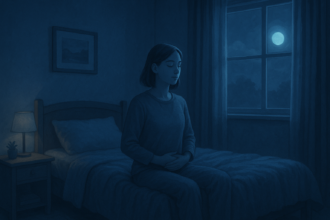

If you have ever replayed a conversation for hours, felt tense before speaking up, or avoided an event because the thought of being judged felt overwhelming, you are not alone. Many people ask, What Causes Social Anxiety? Common Triggers and Helpful Strategies can help you understand why social situations sometimes feel so intense and what you can do to handle them with more confidence. This article is educational, not a diagnosis, but it can give you practical tools and a clearer starting point.
Social anxiety is more than ordinary shyness or occasional nervousness. It often involves a strong fear of negative evaluation, embarrassment, rejection, or being noticed in a way that feels unsafe. For some people, it shows up mainly in public speaking. For others, it can appear in everyday moments like ordering food, texting someone back, attending a party, dating, making small talk, or speaking during a work meeting.
The good news is that social anxiety is understandable and manageable. With the right support, self-awareness, and gradual practice, many people learn to relate to social situations differently. You do not need to become the loudest person in the room. The goal is to feel freer to participate in life without fear making every decision for you.
What Causes Social Anxiety? Common Triggers and Helpful Strategies Explained
When people search for What Causes Social Anxiety? Common Triggers and Helpful Strategies, they are usually looking for two things: why this fear happens and how to make it less controlling. Social anxiety usually develops from a mix of factors rather than one single cause. Biology, temperament, past experiences, stress, family patterns, social learning, and thinking habits can all play a role.
According to the National Institute of Mental Health, anxiety disorders involve persistent fear or worry that can interfere with daily life, and social anxiety disorder is one recognized form of anxiety. You can learn more from the National Institute of Mental Health overview of anxiety disorders. Still, not everyone who feels socially anxious has a disorder. Many people experience social anxiety symptoms during stressful seasons, after embarrassing experiences, or when facing unfamiliar social demands.
It may help to think of social anxiety as a protective alarm system. The brain is trying to prevent rejection, humiliation, or social pain. The problem is that the alarm can become too sensitive, warning you of danger even when the actual risk is low. For example, your mind may treat a casual comment in a meeting as if it could ruin your reputation, even when others barely noticed it.
Why Social Anxiety Develops
Understanding What Causes Social Anxiety? Common Triggers and Helpful Strategies begins with recognizing that social fear often has layers. Some factors are inherited or biological. Others are learned through experience. Some are reinforced by avoidance, perfectionism, or constant self-monitoring.
Temperament and sensitivity
Some people are naturally more cautious, observant, or sensitive to other people’s reactions. This is not a flaw. A sensitive temperament can come with strengths such as empathy, thoughtfulness, and emotional awareness. But when sensitivity combines with pressure to perform socially, it may increase the chance of feeling anxious in groups, conversations, or unfamiliar settings.
For example, a child who is highly observant may notice every facial expression in a classroom. If classmates laugh nearby, the child might wonder, Are they laughing at me? Over time, this habit of scanning for signs of rejection can become automatic.
Genetics and brain-body responses
Family history can influence anxiety vulnerability. If anxiety runs in your family, you may have a nervous system that reacts strongly to perceived threat. This does not mean social anxiety is inevitable. It simply means your body may activate faster in situations that feel uncertain or evaluative.
When asking What Causes Social Anxiety? Common Triggers and Helpful Strategies, it is useful to understand the body’s role. Social anxiety can trigger physical symptoms like a racing heart, sweating, trembling, nausea, tightness in the chest, dry mouth, or blushing. These symptoms are part of the body’s stress response, not proof that something is wrong with you. If you want a broader look at anxiety sensations, you may find what anxiety feels like helpful.
Past embarrassment, rejection, or bullying
Social anxiety can also grow from painful experiences. Being teased, excluded, criticized, humiliated, or harshly judged can teach the brain that social attention is dangerous. Even one memorable experience, such as freezing during a presentation, being laughed at, or receiving a cruel comment, may make future social situations feel threatening.
This is especially true when the experience happens during childhood or adolescence, when belonging feels essential. The mind may create a rule like, If I speak up, I will be embarrassed or If people notice me, I am unsafe. These rules can remain active long after the original event has passed.
Family patterns and social learning
Families influence how people learn to handle attention, mistakes, conflict, and uncertainty. A person may become more socially anxious if they grew up in an environment where criticism was common, emotions were dismissed, perfection was expected, or social risks were discouraged.
This does not mean parents are always to blame. Families often do the best they can with the tools they have. But social anxiety can be learned when a person repeatedly sees avoidance modeled as the safest response. For instance, if a parent often says, Do not say anything or people will judge you, a child may begin to see normal social moments as risky.
Perfectionism and fear of mistakes
Perfectionism can intensify social anxiety because it sets an impossible standard for interaction. Instead of allowing conversations to be natural, imperfect, and human, the anxious mind demands flawless performance. You may feel pressure to say the right thing, look relaxed, never blush, never pause, never stumble, and never disappoint anyone.
When exploring What Causes Social Anxiety? Common Triggers and Helpful Strategies, perfectionism deserves attention because it keeps the fear alive. If your standard is perfection, every social situation becomes a test you can fail. A more realistic goal is not to perform perfectly, but to stay present and kind to yourself while interacting.
Overthinking after social situations
Many people with social anxiety do not only feel anxious before or during an event. They also experience post-event rumination. This means replaying conversations, analyzing tone, facial expressions, word choices, pauses, and possible mistakes. You might think, Why did I say that? or They probably think I am awkward.
Rumination can make the brain believe the situation was more dangerous than it was. If this pattern sounds familiar, the NoOverthinking guide on how to stop overthinking after a conversation offers practical ways to interrupt the cycle.
Common Social Anxiety Triggers
A major part of What Causes Social Anxiety? Common Triggers and Helpful Strategies is learning which situations activate your fear most often. Triggers vary from person to person, but they usually involve being seen, evaluated, rejected, compared, or placed in uncertainty.
Speaking in front of others
Public speaking is one of the most common social anxiety triggers. This can include presentations, class participation, work meetings, interviews, wedding speeches, or even introducing yourself in a group. The fear is often not just about speaking; it is about being watched while speaking.
Practical example: You know your topic well, but as soon as everyone turns toward you, your heart races and your mind goes blank. The fear becomes, What if they notice I am nervous? This fear of visible anxiety can make the anxiety stronger.
Meeting new people
Meeting strangers can trigger social anxiety because there is little information to predict how the interaction will go. You may worry about first impressions, awkward silences, or whether the other person likes you. The mind may try to prepare every possible sentence in advance, which can make the interaction feel even more pressured.
If you are wondering What Causes Social Anxiety? Common Triggers and Helpful Strategies in new social settings, uncertainty is often a key ingredient. The brain prefers predictability. New people create unknowns, and the anxious mind may fill those unknowns with worst-case scenarios.
Being observed while doing something
Some people feel anxious when eating in public, writing while someone watches, walking into a room late, using a public restroom, exercising at a gym, or making a phone call where others can hear. The trigger is not the task itself; it is the feeling of being observed and possibly judged.
For example, you may comfortably drink coffee alone at home but feel self-conscious lifting the cup in a meeting. The anxious mind says, Everyone can see my hands shaking, even when most people are focused on themselves.
Authority figures and performance situations
Bosses, teachers, doctors, coaches, or interviewers can increase anxiety because the interaction feels evaluative. You may worry about sounding unintelligent, asking the wrong question, or being criticized. This can lead to over-preparing, avoiding questions, or staying silent even when you have something meaningful to contribute.
Conflict, disagreement, and setting boundaries
Social anxiety is not always about parties or small talk. It can also appear when you need to say no, disagree, ask for help, return an item, make a complaint, or express a preference. If you associate disagreement with rejection or anger, even a small boundary can feel threatening.
Practical example: A friend chooses a restaurant you do not like. Instead of suggesting another option, you agree immediately because you worry that speaking up will seem rude. Later, you feel frustrated with yourself. This pattern is common, and it can change with practice.
Digital communication
Texts, emails, voice messages, and social media can also trigger social anxiety. You may reread a message repeatedly before sending it or feel anxious when someone does not reply quickly. Online communication removes tone and facial cues, which can make the anxious mind guess negatively.
In modern life, What Causes Social Anxiety? Common Triggers and Helpful Strategies includes digital triggers too. A delayed reply does not automatically mean rejection, but social anxiety may interpret silence as evidence that something is wrong.
How Avoidance Keeps Social Anxiety Going
Avoidance is understandable. If something makes you anxious, avoiding it can bring quick relief. The problem is that avoidance teaches your brain, I escaped, so it must have been dangerous. This can make the next social situation feel even harder.
Avoidance can be obvious, such as skipping a party, canceling plans, or refusing to speak in a meeting. It can also be subtle. These are often called safety behaviors. They reduce anxiety temporarily but prevent you from learning that you can cope.
- Rehearsing sentences excessively before every interaction
- Avoiding eye contact completely
- Speaking very little so you cannot make a mistake
- Checking your phone to avoid conversation
- Only attending events if a safe person comes with you
- Leaving early whenever anxiety rises
- Over-apologizing to prevent disapproval
The goal is not to remove every safety behavior overnight. Instead, notice which habits keep you stuck and experiment with reducing them gradually.
Helpful Strategies for Social Anxiety
Once you understand What Causes Social Anxiety? Common Triggers and Helpful Strategies, the next step is building skills. The following strategies are not instant cures, but they can help you respond to anxiety in a more balanced, compassionate, and effective way.
1. Name the anxiety without fighting it
When anxiety rises, try naming it simply: This is social anxiety showing up or My threat system is activated. Naming the experience creates a little distance from it. Instead of believing every anxious thought, you can recognize it as a mental event.
For example, if your mind says, Everyone thinks I am awkward, you might respond, I am having the thought that everyone thinks I am awkward. This small shift can reduce the thought’s authority.
2. Calm the body first
Social anxiety often feels physical before it feels logical. Your body may react faster than your reasoning mind. Because of this, body-based calming can be useful.
- Take a slow breath in through your nose and exhale longer than you inhale.
- Relax your shoulders and unclench your jaw.
- Press your feet gently into the floor to ground yourself.
- Look around and name five neutral objects you can see.
- Remind yourself: Anxiety is uncomfortable, but it can pass.
The American Psychological Association offers helpful information on stress and coping through its stress resource page. Managing general stress can make social anxiety feel less intense because a calmer nervous system usually has more room for flexibility.
3. Challenge mind reading
Social anxiety often includes mind reading, which means assuming you know what others think. You may believe someone noticed your blush, judged your comment, or disliked you because they looked away. But these interpretations are not facts.
Try asking yourself:
- What evidence do I have for this thought?
- Is there another possible explanation?
- Would I judge someone else this harshly?
- What would I tell a friend in this situation?
- Can I allow uncertainty without solving it right now?
If you often struggle with self-critical thoughts, you may also benefit from reading about self-doubt and its common signs, since self-doubt and social anxiety often overlap.
4. Practice gradual exposure
Gradual exposure means facing feared situations in small, manageable steps instead of avoiding them completely. The purpose is not to force yourself into panic. The purpose is to teach your brain that you can handle discomfort and that feared outcomes are often less likely or less catastrophic than anxiety predicts.
Here is a simple example of an exposure ladder:
- Smile at a cashier.
- Say hello to a neighbor.
- Ask a store employee where an item is located.
- Make brief small talk with a coworker.
- Share one comment in a meeting.
- Attend a small gathering for 30 minutes.
- Give a short presentation or speak in a group.
When learning What Causes Social Anxiety? Common Triggers and Helpful Strategies, exposure is important because avoidance strengthens fear, while gentle repetition can build confidence. Start with steps that feel challenging but possible.
5. Shift attention outward
Social anxiety pulls attention inward. You may monitor your voice, face, posture, breathing, hands, and every word you say. This self-monitoring makes it harder to connect naturally.
Practice shifting attention outward by focusing on the other person’s message, the color of the room, the topic being discussed, or the purpose of the interaction. In a conversation, try listening for one interesting detail you can ask about. This helps move your brain from performance mode into connection mode.
6. Build realistic social goals
An anxious goal might be, I must make everyone like me. A realistic goal might be, I will ask one question and stay for 20 minutes. Smaller goals make progress measurable and less overwhelming.
Examples of realistic social goals include:
- Say one sentence during a team meeting.
- Send the email without rereading it more than twice.
- Attend a social event and stay long enough to greet three people.
- Practice saying, Let me think about that instead of automatically agreeing.
- Allow one awkward pause without rushing to fill it.
These goals may seem small, but they train your brain to tolerate normal social uncertainty.
7. Reduce post-event rumination
After a social event, the anxious mind may want to review everything in search of mistakes. Instead of entering a long mental replay, create a short reflection routine.
- Write down one thing that went okay.
- Write down one thing you learned.
- Write down one compassionate statement to yourself.
- Set a time limit, such as five minutes, then move to another activity.
For example: I felt nervous, but I still asked a question. I learned that pausing did not ruin the conversation. I am allowed to be human. This kind of reflection supports growth without feeding rumination.
When to Consider Professional Support
It may be time to consider professional support if social anxiety is interfering with work, school, relationships, health care, daily responsibilities, or your ability to enjoy life. A licensed mental health professional can help you understand your symptoms and choose an appropriate treatment approach. Cognitive behavioral therapy, exposure-based approaches, acceptance and commitment therapy, and sometimes medication may be discussed depending on the individual and the severity of symptoms.
If you are researching What Causes Social Anxiety? Common Triggers and Helpful Strategies because your fear feels intense, persistent, or hard to manage alone, reaching out for help is a strong and reasonable step. Support is especially important if anxiety leads to isolation, panic-like symptoms, depression, substance use to cope, or thoughts of self-harm. If you are in immediate danger or may harm yourself, contact emergency services or a crisis hotline in your area right away.
Therapy is not about forcing you to become someone else. It is about helping you understand your patterns, reduce avoidance, build coping skills, and take meaningful steps toward the life you want.
Everyday Practices That Build Social Confidence
Confidence is often built through repeated experiences of coping, not through waiting until anxiety disappears. You can begin with small daily actions that teach your nervous system a new message: I can feel anxious and still participate.
- Use compassionate self-talk: Speak to yourself the way you would speak to someone you care about.
- Practice imperfect conversations: Let yourself pause, stumble, or say something simple without overcorrecting.
- Limit comparison: People who seem confident may also feel nervous inside.
- Prepare lightly: Write down two talking points, but avoid scripting every word.
- Celebrate effort: Measure success by showing up, not by feeling perfectly calm.
- Protect your basics: Sleep, movement, nutrition, and stress management can influence anxiety levels.
As you practice, remember that progress may be uneven. You might feel calm one day and anxious the next. That does not mean you are failing. It means you are human, and your nervous system is learning over time.
FAQ
What Causes Social Anxiety? Common Triggers and Helpful Strategies for beginners?
Social anxiety can be influenced by temperament, genetics, past embarrassment or rejection, family patterns, stress, perfectionism, and avoidance. Common triggers include public speaking, meeting new people, being observed, conflict, and digital communication. Helpful strategies include calming the body, challenging anxious thoughts, practicing gradual exposure, and seeking professional support when anxiety interferes with daily life.
Is social anxiety the same as being shy?
Not always. Shyness is a personality tendency that may involve feeling reserved or slow to warm up. Social anxiety usually includes stronger fear of judgment, embarrassment, or rejection and may lead to avoidance or significant distress. A person can be shy without having severe anxiety, and a socially anxious person may not appear shy on the outside.
Can social anxiety cause physical symptoms?
Yes, social anxiety can come with physical sensations such as a racing heart, sweating, trembling, blushing, nausea, dry mouth, dizziness, or muscle tension. These symptoms are related to the body’s stress response. If symptoms are intense, new, or concerning, it is wise to talk with a healthcare professional to rule out medical causes and discuss support.
How can I calm social anxiety before an event?
Try using slow breathing, grounding your attention in the present moment, preparing one or two simple conversation starters, and setting a realistic goal for the event. Instead of aiming to feel completely calm, aim to participate while allowing some anxiety to be present. Remind yourself that nervousness is not failure.
When should I get help for social anxiety?
Consider getting help if social anxiety causes ongoing distress, leads to avoidance, affects school or work, makes relationships difficult, or limits important parts of your life. A licensed therapist or qualified mental health professional can help you understand what is happening and develop a plan that fits your needs.
Conclusion
So, What Causes Social Anxiety? Common Triggers and Helpful Strategies comes down to understanding both the roots of social fear and the habits that keep it going. Social anxiety may be shaped by biology, sensitivity, past experiences, learned patterns, perfectionism, and overthinking. It is often triggered by situations where you feel watched, evaluated, uncertain, or at risk of rejection.
But social anxiety is not a character flaw, and it does not have to define your future. Small steps matter. Calming your body, questioning anxious predictions, reducing avoidance, practicing gradual exposure, and treating yourself with compassion can help you build steadier confidence over time. If anxiety feels overwhelming or limits your life, professional support can make a meaningful difference.
For more supportive mental health and personal growth guides, explore more articles on NoOverthinking and keep taking one calm, practical step at a time.