If you have ever wondered, Why Does Anxiety Make Your Heart Race When You’re Trying to Sleep, you are not alone. Many people feel relatively functional during the day, only to lie down at night and suddenly notice pounding, fluttering, or a fast heartbeat. It can feel confusing because bedtime is supposed to be peaceful. Instead, your body acts as if something urgent is happening. The good news is that a racing heart at night is often connected to how anxiety affects the nervous system, attention, and stress hormones. While it can feel unsettling, there are practical ways to calm your body and support better sleep.
Why Does Anxiety Make Your Heart Race When You’re Trying to Sleep?
The simplest answer to Why Does Anxiety Make Your Heart Race When You’re Trying to Sleep is that anxiety activates your body’s threat-response system. When your brain senses danger, uncertainty, or emotional pressure, it can send signals that prepare your body to protect you. Your heart may beat faster, your breathing may become shallow, your muscles may tighten, and your mind may scan for problems.
This response is often called the fight-or-flight response. It is not a sign that you are weak or doing something wrong. It is your nervous system trying to help, even when there is no immediate physical danger. For example, your brain may respond to an upcoming deadline, a difficult conversation, money stress, health worries, or unresolved emotions as if they are threats that require alertness.
Understanding Why Does Anxiety Make Your Heart Race When You’re Trying to Sleep can reduce some of the fear around the sensation. A fast heartbeat can become more distressing when you interpret it as dangerous. That fear can trigger more adrenaline, which may make your heart beat even faster. This creates a loop: anxiety causes body sensations, body sensations create worry, and worry increases anxiety.
According to the American Psychological Association’s information on stress, stress can affect the body in many ways, including the cardiovascular, respiratory, and nervous systems. Anxiety-related nighttime heart racing is often part of this broader stress response, especially when the mind finally has quiet space to process what happened during the day.
What Happens in Your Body During Nighttime Anxiety
Your nervous system shifts into high alert
When anxiety rises, the sympathetic nervous system becomes more active. This part of your nervous system helps mobilize energy. It can increase heart rate, raise blood pressure temporarily, and make you feel more awake. At night, this can feel especially noticeable because your environment is quiet and still.
During the day, distractions can hide anxiety symptoms. You may be working, talking, driving, checking messages, or solving problems. At night, those distractions fade. You lie still, the room gets quiet, and suddenly your heartbeat feels loud. The sensation may have been there earlier, but you are now more aware of it.
Adrenaline and cortisol can keep you alert
Anxiety can increase stress chemicals such as adrenaline and cortisol. These chemicals are useful when you need energy, focus, or quick action. They are less useful when you want to drift off to sleep. If your body releases these chemicals near bedtime, you may feel wired, restless, shaky, hot, or alert.
This is one reason a person can feel exhausted and activated at the same time. You may think, I am so tired, why can’t I sleep? But your body may be receiving mixed messages: your sleep drive says rest, while your stress system says stay alert.
Your breathing pattern may change
Anxiety often causes subtle changes in breathing. You may breathe faster, hold your breath, or breathe high in your chest without realizing it. This can make your body feel more tense and may contribute to sensations such as tightness, dizziness, tingling, or a pounding heart.
Slowing your breathing does not magically erase every anxious thought, but it can send your nervous system a signal that you are not in immediate danger. This is why breathing techniques can be useful when your heart races at bedtime.
Why Does Anxiety Make Your Heart Race When You’re Trying to Sleep More Than During the Day?
Many people notice anxiety symptoms most strongly at night. Why Does Anxiety Make Your Heart Race When You’re Trying to Sleep more than it does in the middle of a busy afternoon? One reason is that your attention has fewer places to go. Without daytime noise, your brain may turn inward and notice every heartbeat, breath, or muscle twitch.
Another reason Why Does Anxiety Make Your Heart Race When You’re Trying to Sleep is that bedtime can become associated with worry. If you have had several nights of lying awake with a racing heart, your brain may start to anticipate the problem. You may get into bed and think, What if it happens again? That anticipation alone can trigger the same physical response.
Nighttime also brings emotional processing. The mind often reviews the day, replays conversations, worries about tomorrow, and brings up unfinished concerns. If you tend to overthink at night, your body may respond to those thoughts as if they require immediate action. For more support with this pattern, you may find these strategies to stop racing thoughts at night helpful.
Common Anxiety Triggers That Can Make Your Heart Pound at Bedtime
When people ask Why Does Anxiety Make Your Heart Race When You’re Trying to Sleep, the answer is often connected to both biology and daily habits. Your body may be reacting not only to anxious thoughts, but also to routines that keep your nervous system activated.
Common triggers include:
- Unprocessed stress: Work pressure, relationship tension, family responsibilities, or financial concerns can surface when you finally slow down.
- Fear of not sleeping: Worrying about tomorrow’s fatigue can make sleep feel like a performance test.
- Screen stimulation: Late-night scrolling, stressful news, or intense videos can keep your brain alert.
- Caffeine or nicotine: Stimulants can increase physical arousal, especially if used later in the day.
- Alcohol: Alcohol may make you sleepy at first, but it can disrupt sleep and increase nighttime awakenings.
- Heavy meals close to bed: Digestion, reflux, or discomfort can make the body feel activated.
- Health anxiety: Focusing on body sensations can make normal changes in heart rate feel alarming.
- Major life changes: Grief, transitions, conflict, or uncertainty can increase nighttime vulnerability.
It can help to view these triggers as clues, not personal failures. You are not trying to blame yourself. You are learning what your body may be responding to so you can make small, realistic changes.
When a Racing Heart Feels Like Panic
Sometimes nighttime anxiety escalates into panic-like symptoms. This may include a sudden surge of fear, pounding heart, sweating, trembling, chest tightness, shortness of breath, nausea, or feeling detached from reality. Panic symptoms can feel intense, but they are not uncommon. If this happens often, or if you are unsure whether your symptoms are anxiety-related, consider speaking with a healthcare professional.
The National Institute of Mental Health offers helpful information about anxiety disorders and excessive worry. Reading about anxiety can be useful, but it is not a substitute for personalized care. A doctor or licensed mental health professional can help you understand what is happening and discuss appropriate treatment options.
It is also important to be cautious with new, severe, or unusual physical symptoms. If you have chest pain, fainting, severe shortness of breath, pain spreading to your arm or jaw, or symptoms that feel medically urgent, seek emergency medical help. Anxiety can cause strong physical sensations, but it is always okay to take your health seriously.
If you are trying to understand the difference between anxiety sensations and panic symptoms, this guide to panic attack symptoms and what helps may offer additional clarity.
What to Do When You Wonder: Why Does Anxiety Make Your Heart Race When You’re Trying to Sleep
When your heart starts racing at night, your first instinct may be to fight it, check your pulse repeatedly, or force yourself to sleep. Unfortunately, pressure often increases alertness. A more effective approach is to gently signal safety to your body, reduce stimulation, and give your mind somewhere steady to rest.
1. Name what is happening without adding fear
A simple label can reduce the sense of mystery. Try saying to yourself: This feels like anxiety in my body. My nervous system is activated. I do not have to like this, but I can respond calmly.
This does not mean ignoring your health. It means avoiding catastrophic interpretations when the pattern is familiar and anxiety-related. The way you talk to yourself can either escalate or soften the experience.
2. Slow your exhale
One of the quickest ways to communicate calm to your nervous system is to lengthen your exhale. You do not need a complicated method. Try this:
- Inhale gently through your nose for 4 seconds.
- Exhale slowly for 6 to 8 seconds.
- Relax your shoulders as you breathe out.
- Repeat for 3 to 5 minutes.
The goal is not to control your heart directly. The goal is to create conditions where your body can naturally settle.
3. Stop checking your heartbeat repeatedly
Checking your pulse can feel reassuring for a moment, but it often keeps attention locked onto the sensation. The more you monitor your heart, the more important and threatening it may feel to your brain.
If you regularly search Why Does Anxiety Make Your Heart Race When You’re Trying to Sleep after checking your pulse at night, consider setting a boundary with reassurance-seeking. You might tell yourself: I can notice this sensation without investigating it for the next ten minutes. Then redirect your attention to breathing, grounding, or a calming audio track.
4. Use a grounding exercise
Grounding helps move attention away from anxious predictions and back into the present moment. Try the 5-4-3-2-1 method:
- Name 5 things you can see.
- Name 4 things you can feel.
- Name 3 things you can hear.
- Name 2 things you can smell.
- Name 1 thing you can taste or one calming phrase you can repeat.
This technique is simple, but it gives your brain a structured task. That structure can interrupt spiraling thoughts.
5. Write down the worry, then postpone it
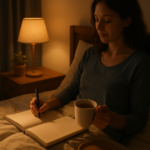
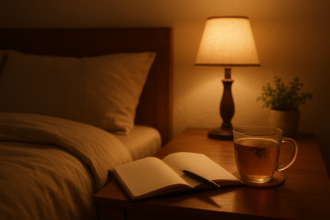
If your racing heart is connected to overthinking, keep a notebook near your bed. Write one sentence about the worry and one possible next step. For example: I am worried about tomorrow’s meeting. I will review my notes at 9 a.m.
This tells your brain that the concern has been recorded and does not need to be solved at 2 a.m. If overthinking is a frequent bedtime pattern, you may also benefit from this article on how to calm your mind when overthinking at night.
6. Create a wind-down routine that starts before bed
A racing heart in bed often begins before you get into bed. If your evening is full of emails, arguments, bright screens, caffeine, or intense problem-solving, your body may not be ready to sleep just because the clock says it is bedtime.
Try a 30-minute wind-down routine:
- Dim lights and reduce screen use.
- Do light stretching or take a warm shower.
- Prepare your room so it feels cool, dark, and comfortable.
- Write tomorrow’s top three priorities.
- Listen to calming music, a sleep meditation, or a quiet audiobook.
A consistent routine teaches your brain that the day is ending. This can be especially helpful when Why Does Anxiety Make Your Heart Race When You’re Trying to Sleep becomes a repeated concern.
7. Get out of bed briefly if anxiety keeps building
If you have been lying awake for a while and becoming more frustrated, consider getting out of bed for a short reset. Keep the lights low and do something quiet, such as reading a calm book or sitting with a warm drink that does not contain caffeine. Return to bed when you feel sleepier.
This can help prevent your brain from strongly associating bed with panic, pressure, or mental struggle. The goal is not to avoid bed, but to rebuild a calmer connection with it.
How to Change the Thought Loop That Keeps Your Heart Racing
A helpful answer to Why Does Anxiety Make Your Heart Race When You’re Trying to Sleep includes the role of interpretation. The heartbeat itself may be uncomfortable, but the story you attach to it can intensify the reaction. For example, the thought something is wrong with me may trigger more fear than the thought my body is having an anxiety response.
Try replacing catastrophic thoughts with balanced thoughts:
- Instead of: This will never stop. Try: This is uncomfortable, and it has passed before.
- Instead of: I must sleep right now. Try: Resting quietly still helps my body.
- Instead of: My heartbeat means danger. Try: Anxiety can make my heart beat faster, and I can respond gently.
- Instead of: Tomorrow is ruined. Try: I have handled tired days before, and I can simplify where possible.
Balanced thinking is not fake positivity. It is a way to stop feeding fear with worst-case predictions. Over time, this can teach your nervous system that nighttime body sensations do not require an emergency response.
When to Seek Professional Support
If Why Does Anxiety Make Your Heart Race When You’re Trying to Sleep is a question you are asking most nights, it may be time to get extra support. You do not need to wait until things feel unbearable. Therapy, medical guidance, and lifestyle support can all help reduce nighttime anxiety and improve sleep quality.
Consider reaching out to a doctor or mental health professional if:
- Your racing heart is frequent, intense, or worsening.
- You avoid sleep because you fear anxiety symptoms.
- You experience panic-like episodes at night.
- Your sleep problems affect work, relationships, driving, or daily functioning.
- You rely heavily on alcohol, sedatives, or other substances to sleep.
- You have medical concerns or a personal or family history of heart issues.
A professional can help rule out medical contributors, discuss anxiety treatment options, and support healthier sleep patterns. Cognitive behavioral therapy, relaxation training, mindfulness-based tools, and sometimes medication may be considered depending on the person and situation.
For broader anxiety support, you may also want to read practical ways to handle anxiety and calm your mind.
Small Daily Habits That Can Reduce Nighttime Heart Racing
Evening anxiety is often influenced by what happens throughout the entire day. Small habits can lower your overall stress load, making it less likely that your body will surge into high alert when you lie down.
Helpful daily habits include:
- Move your body: Gentle to moderate exercise can help discharge stress and improve sleep pressure. Try walking, yoga, swimming, or cycling earlier in the day.
- Limit late caffeine: If you are sensitive to caffeine, consider stopping by late morning or early afternoon.
- Schedule worry time: Set aside 10 minutes earlier in the evening to write worries and next steps, so your brain is less likely to bring them to bed.
- Get morning light: Natural light supports your circadian rhythm and can make sleep feel more natural at night.
- Practice relaxation when calm: Do breathing exercises during the day, not only during anxiety. This makes them easier to use at night.
- Reduce sleep pressure: Remind yourself that rest matters too. Trying to force sleep usually backfires.
Think of these habits as nervous system training. You are not trying to eliminate every anxious feeling. You are creating a lifestyle that gives your body more opportunities to feel safe.
FAQ
Why Does Anxiety Make Your Heart Race When You’re Trying to Sleep?
Why Does Anxiety Make Your Heart Race When You’re Trying to Sleep often comes down to the fight-or-flight response. Anxiety can activate stress hormones and the sympathetic nervous system, which may increase heart rate and make you feel more alert. At night, the quiet environment can make those sensations feel stronger because there are fewer distractions.
Can anxiety cause a racing heart even if I do not feel worried?
Yes, it can. Some people experience physical anxiety symptoms before they notice anxious thoughts. Your body may be responding to accumulated stress, poor sleep, caffeine, unresolved emotions, or a conditioned bedtime anxiety pattern. If the symptom is new, severe, or concerning, it is wise to check with a healthcare professional.
How do I calm my heart when anxiety hits at night?
Start by slowing your breathing, especially your exhale. Try inhaling for 4 seconds and exhaling for 6 to 8 seconds. Relax your shoulders, unclench your jaw, and remind yourself that your body is activated, not necessarily in danger. Grounding exercises, calming music, journaling, and reducing pulse-checking can also help.
Should I stay in bed if my heart is racing and I cannot sleep?
If you feel increasingly anxious after lying awake for a while, a brief reset may help. Get up, keep the lights low, and do something calm and unstimulating until you feel sleepier. This can reduce the association between bed and anxiety. Avoid bright screens, work tasks, or anything that wakes you up more.
Why Does Anxiety Make Your Heart Race When You’re Trying to Sleep every night?
Why Does Anxiety Make Your Heart Race When You’re Trying to Sleep every night may involve a learned anxiety-sleep cycle. After repeated episodes, your brain may start anticipating the racing heart, which triggers more anxiety. Consistent wind-down routines, daytime stress management, and professional support can help break the pattern.
Conclusion
So, Why Does Anxiety Make Your Heart Race When You’re Trying to Sleep? In many cases, your nervous system is shifting into high alert at the exact moment you want to rest. Stress hormones, anxious thoughts, body scanning, sleep pressure, and bedtime associations can all play a role. Although the sensation can feel uncomfortable, it is often manageable with gentle breathing, grounding, balanced self-talk, healthier evening routines, and support when needed.
You do not have to fight your body to find rest. Start with one small calming practice tonight, repeat it consistently, and give your nervous system time to learn a new pattern. For more practical tools to quiet your mind and reduce nighttime overthinking, explore more helpful articles on NoOverthinking.